


When architecting distributed systems, functional domain models, or high-throughput reactive data pipelines in Scala, navigating algebraic data types, trait mixins, and actor protocols can be complex. The Scala Visualizer transforms Scala classes, case classes, sealed traits, objects, and trait hierarchies into clear, interactive class diagrams. By parsing type definitions, pattern matching hierarchy contracts (sealed trait), mixins (with), and singleton objects, Scala developers and data engineers can visually inspect functional and object-oriented architectures at a glance.
The Mechanics of Scala Visualizations
In VPasCode, Scala rendering automatically parses class, case class, trait, sealed trait, and object definitions into structured UML-style diagram cards. Traits and case classes serve as primary domain nodes, parameter fields list as typed attributes, and inheritance or trait implementation keywords generate clear structural relationship lines between visual entities.
1. Essential Setup
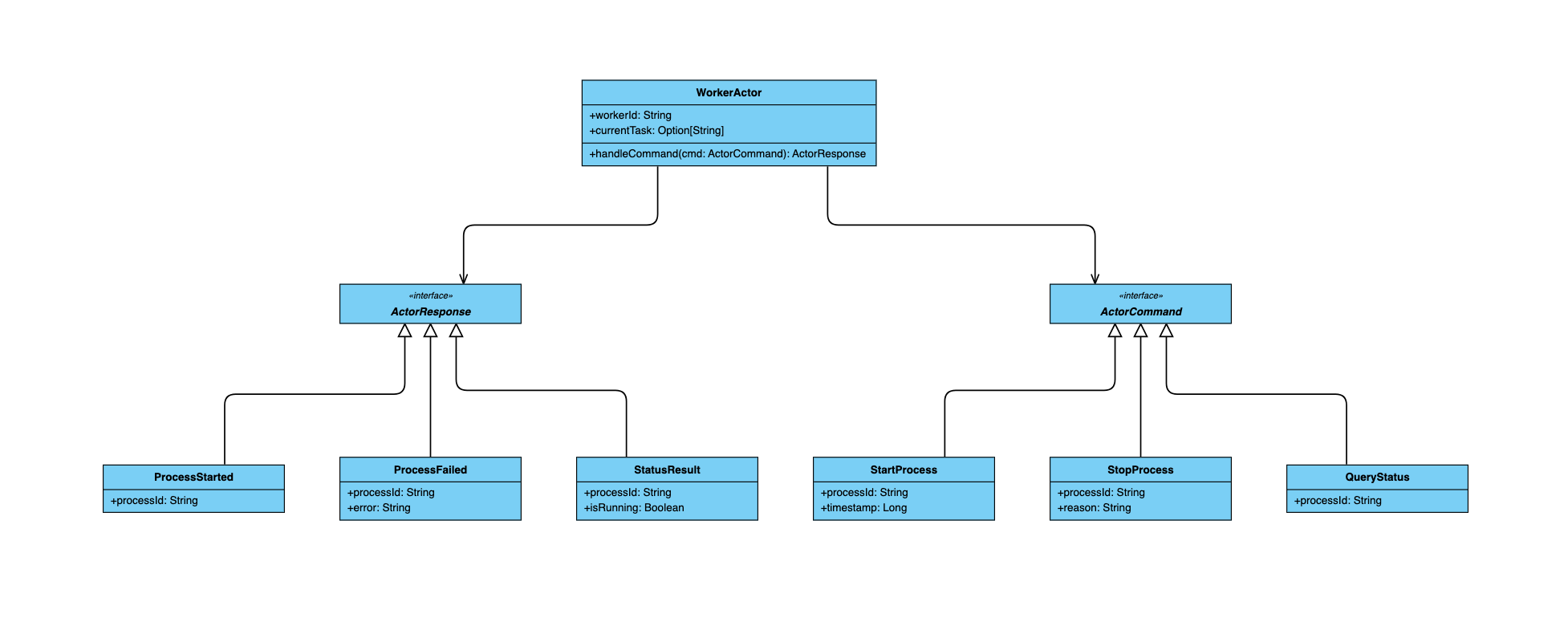
To visualize a standard Scala domain model, define sealed traits for closed type hierarchies alongside concrete case classes. Actor messaging protocols and command channels demonstrate fundamental Scala algebraic data types (ADTs):
package com.example.actor

// Base message protocol contract
sealed trait ActorCommand

// Concrete command messages
case class StartProcess(processId: String, timestamp: Long) extends ActorCommand
case class StopProcess(processId: String, reason: String) extends ActorCommand
case class QueryStatus(processId: String) extends ActorCommand

// Response ADT hierarchy
sealed trait ActorResponse
case class ProcessStarted(processId: String) extends ActorResponse
case class ProcessFailed(processId: String, error: String) extends ActorResponse
case class StatusResult(processId: String, isRunning: Boolean) extends ActorResponse

// Main Worker Actor State Container
class WorkerActor(val workerId: String) {
  private var currentTask: Option[String] = None

  def handleCommand(cmd: ActorCommand): ActorResponse = cmd match {
    case StartProcess(id, _) =>
      currentTask = Some(id)
      ProcessStarted(id)
    case StopProcess(id, reason) =>
      currentTask = None
      StatusResult(id, isRunning = false)
    case QueryStatus(id) =>
      StatusResult(id, currentTask.contains(id))
  }
}
Advanced Structural Techniques
Scala visualizations excel at mapping out pure functional domain models, immutable shopping cart aggregates, and value object hierarchies.
1. Functional E-Commerce Domain Model
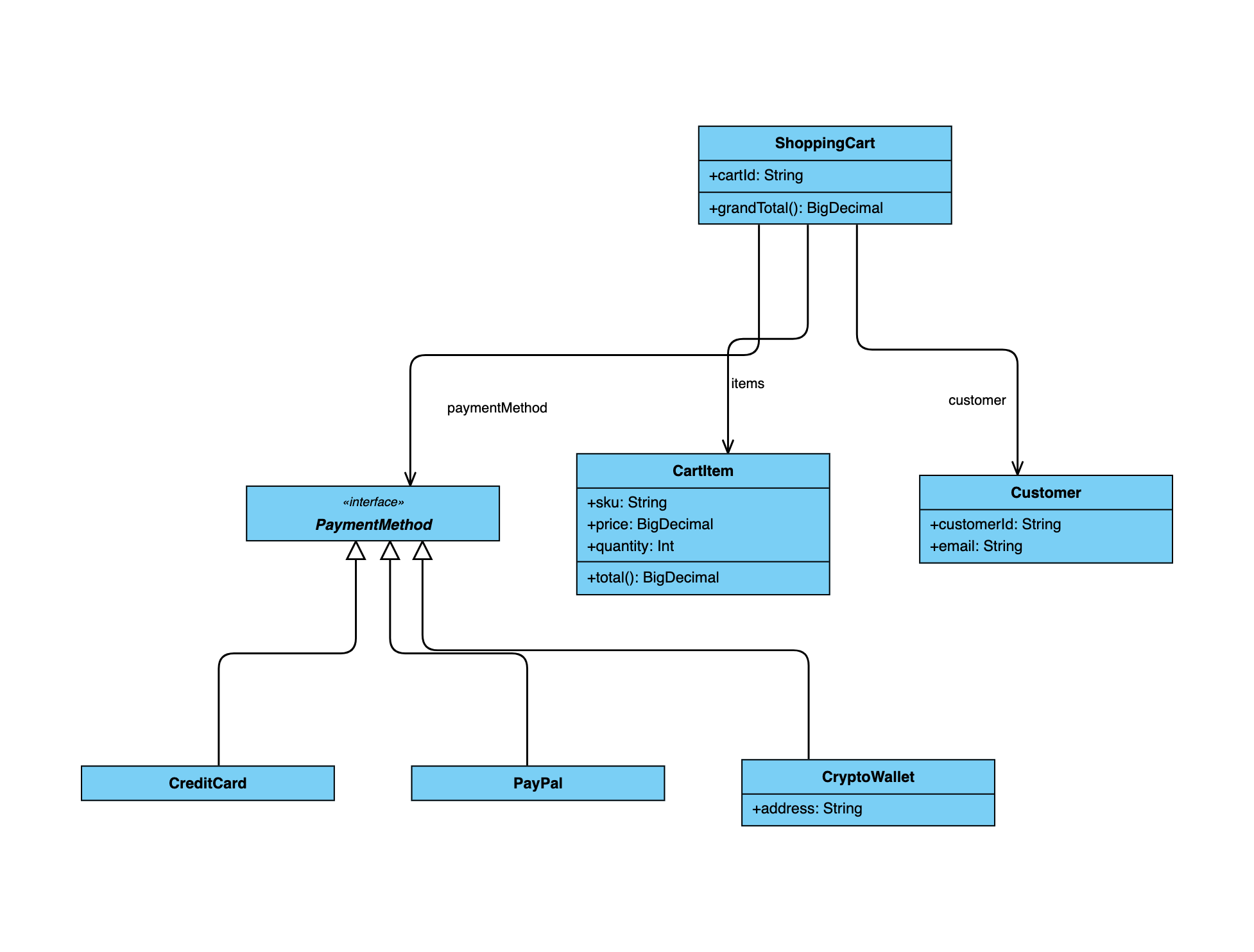
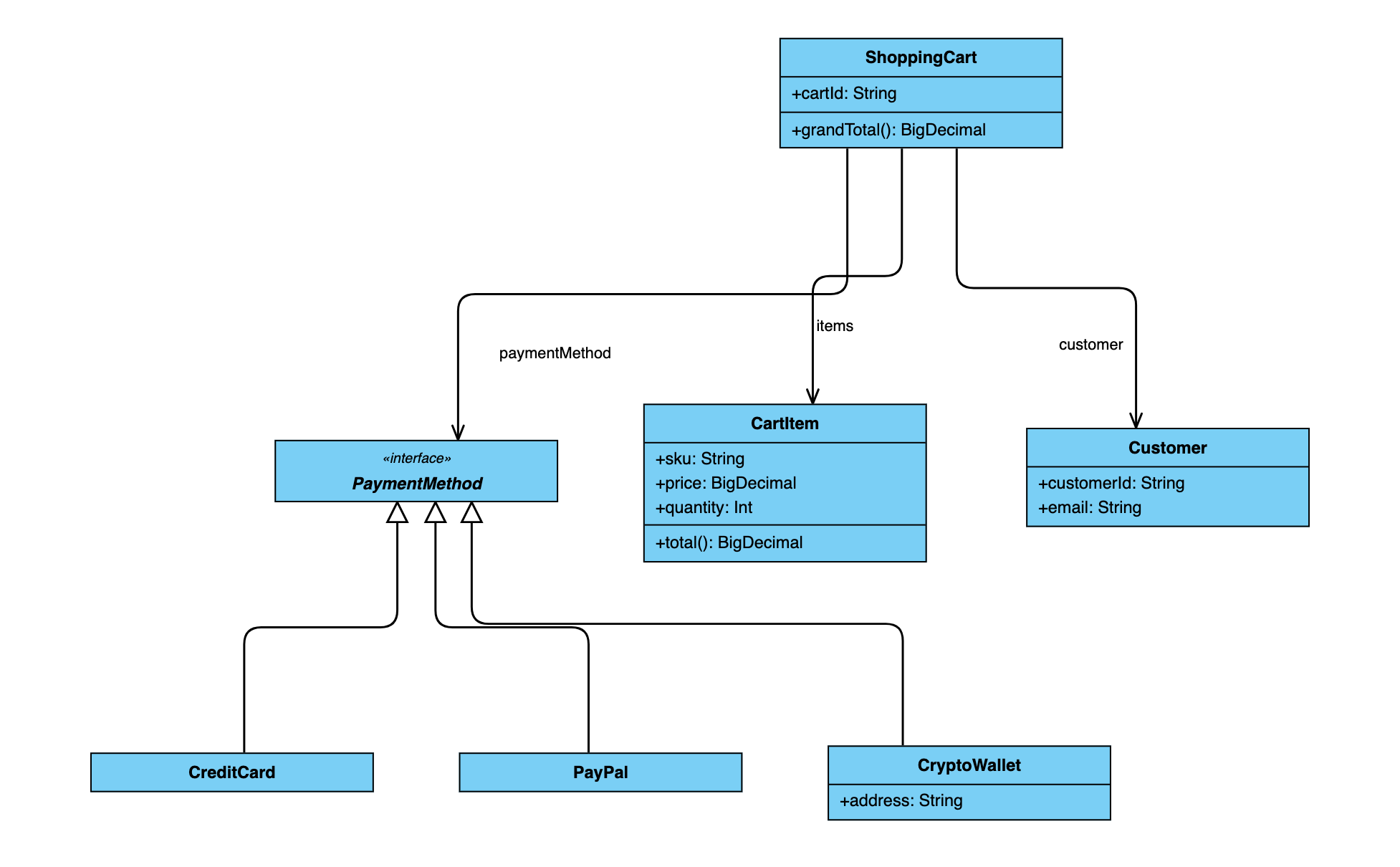
By combining sealed traits for payment types, immutable case classes for cart items, and domain entities, VPasCode cleanly breaks down complex domain logic into readable visual trees:
package com.example.ecommerce

sealed trait PaymentMethod
case object CreditCard extends PaymentMethod
case object PayPal extends PaymentMethod
case class CryptoWallet(address: String) extends PaymentMethod

case class CartItem(sku: String, price: BigDecimal, quantity: Int) {
  def total: BigDecimal = price * quantity
}

case class Customer(customerId: String, email: String)

case class ShoppingCart(
  cartId: String,
  customer: Customer,
  items: List[CartItem],
  paymentMethod: PaymentMethod
) {
  def grandTotal: BigDecimal = items.map(_.total).sum
}
Structuring Reactive Data Streaming Pipelines
Visualizing stream processors, sink traits, and pipeline stage transformation nodes helps data engineers maintain clear modularity across distributed computing jobs.
1. Reactive Data Stream Processor
Group stream source interfaces, transformer traits, and concrete pipeline stages to map out data processing topology:
package com.example.stream

trait StreamSource[T] {
  def readNext(): Option[T]
}

trait StreamSink[T] {
  def write(element: T): Boolean
}

case class LogEvent(eventId: String, level: String, payload: String)

class KafkaLogSource(val topic: String) extends StreamSource[LogEvent] {
  override def readNext(): Option[LogEvent] = {
    Some(LogEvent("evt-101", "INFO", "Payload received"))
  }
}

class ElasticSink(val clusterUrl: String) extends StreamSink[LogEvent] {
  override def write(element: LogEvent): Boolean = {
    println(s"Indexing event ${element.eventId} to $clusterUrl")
    true
  }
}

class LogPipeline(val source: StreamSource[LogEvent], val sink: StreamSink[LogEvent]) {
  def processNext(): Unit = {
    source.readNext().foreach(sink.write)
  }
}
Strategic Best Practices
- Leverage
sealed traitfor Closed Hierarchies: Define domain states and variant classes usingsealed traitso diagram generators group algebraic variants logically. - Use
case classfor Data Containers: Model immutable data structures usingcase classto keep parameter fields automatically exposed and legible on visual node cards. - Separate Functional Contracts with Traits: Define abstract behavioral interfaces using
traitand compose them cleanly usingextendsor mixin syntax.