


在设计 Ruby on Rails Web 应用程序、后台工作管道或 Ruby 中的领域模型时,阅读动态的类定义和模块混入可能会使可视化对象关系变得困难。Ruby 可视化工具将 Ruby 类、模块、混入包含和类层次结构转换为清晰、交互式的类图。通过解析属性访问器(attr_accessor, attr_reader),模块组合(include, extend),以及继承链(<),Ruby 开发人员和后端架构师可以一目了然地直观检查面向对象的领域结构。
Ruby 可视化的原理
在 VPasCode 中,Ruby 渲染会自动解析 class 声明、module 模块混入、属性定义和方法签名,转换为结构化的 UML 风格类卡片。类和模块作为主要的视觉节点,属性读取器显示为字段,而继承或混入包含关键字会自动在视觉实体之间生成关系连接器。
1. 基础设置
为了可视化标准的 Ruby 类层次结构,需定义用于共享行为的模块,同时定义基类和子类实现。支付处理接口展示了 Ruby 中基本的类继承和模块组合:
Ruby
在 VPasCode 中编辑 Ruby
# 共享日志混入
module Loggable
  def log_action(message)
    puts "[LOG] #{Time.now}: #{message}"
  end
end

# 基础抽象风格的支付网关
class BaseGateway
  include Loggable

  attr_reader :api_key, :environment

  def initialize(api_key, environment = :sandbox)
    @api_key = api_key
    @environment = environment
  end

  def process_payment(amount)
    raise NotImplementedError, "子类必须实现 process_payment"
  end
end

# Stripe 实现子类
class StripeGateway < BaseGateway
  attr_accessor :stripe_account_id

  def initialize(api_key, stripe_account_id)
    super(api_key, :production)
    @stripe_account_id = stripe_account_id
  end

  def process_payment(amount)
    log_action("通过 Stripe 处理 $#{amount} 金额")
    true
  end
end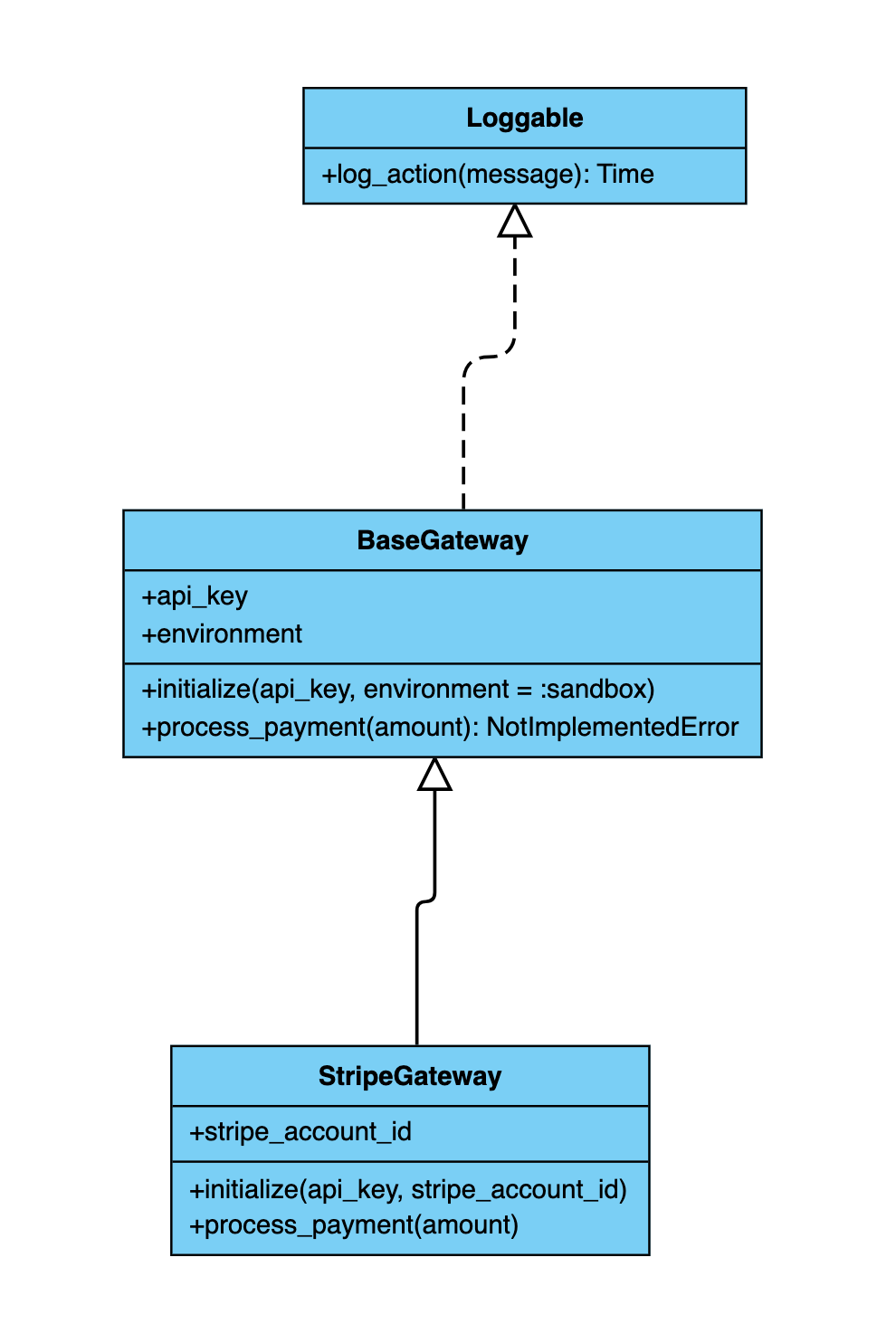
高级结构技术
Ruby 可视化在绘制电子商务履约流程、领域驱动的价值对象以及 Active Record 风格实体方面表现出色。
1. 电子商务订单处理系统
通过结合状态枚举符号、订单明细对象和聚合订单实体,VPasCode 将 Ruby 领域模型转换为清晰、结构化的图示网络:
Ruby
在 VPasCode 中编辑 Ruby
module Shippable
  def calculate_shipping_weight
    line_items.sum(&:weight)
  end
end

class LineItem
  attr_reader :sku, :price, :quantity, :weight

  def initialize(sku, price, quantity, weight = 1.0)
    @sku = sku
    @price = price
    @quantity = quantity
    @weight = weight
  end

  def total_price
    @price * @quantity
  end
end

class Order
  include Shippable

  attr_reader :order_id, :status, :line_items

  def initialize(order_id)
    @order_id = order_id
    @status = :pending
    @line_items = []
  end

  def add_item(item)
    @line_items << item
  end

  def grand_total
    @line_items.sum(&:total_price)
  end
end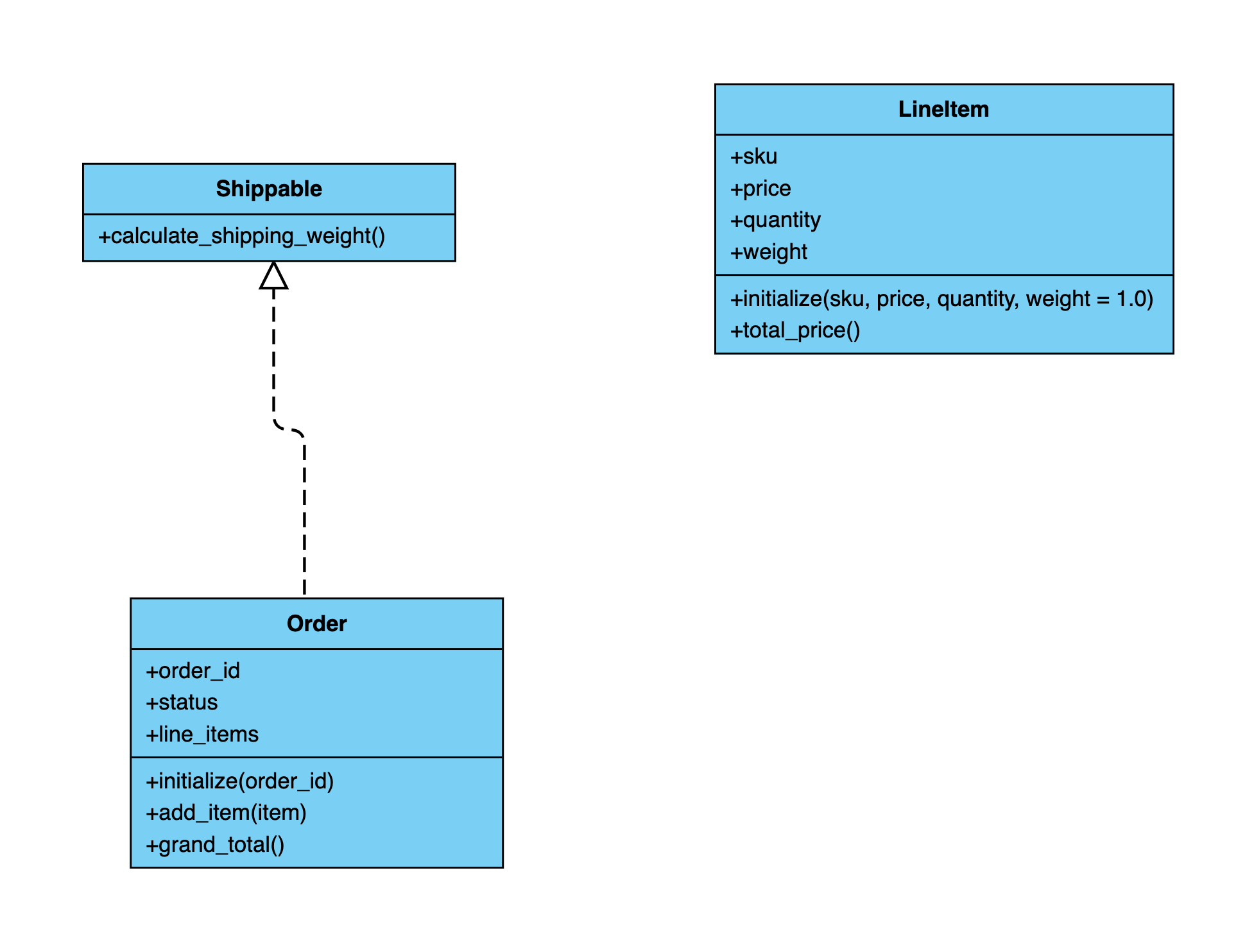
构建用户认证与安全模块
可视化认证策略、令牌生成模块和角色权限处理器,有助于后端工程师在 Ruby 应用中保持清晰的安全边界。
1. 用户认证与权限模块
将凭证检查器、令牌生成器和用户身份类分组,以明确授权边界:
Ruby
在 VPasCode 中编辑 Ruby
module Authenticatable
  def verify_password(input_password)
    BCrypt::Password.new(password_digest) == input_password
  end
end

class User
  include Authenticatable

  attr_accessor :email, :role
  attr_reader :user_id, :password_digest

  def initialize(user_id, email, password_digest, role = :member)
    @user_id = user_id
    @email = email
    @password_digest = password_digest
    @role = role
  end

  def admin?
    @role == :admin
  end
end

class SessionManager
  attr_reader :current_user

  def initialize(user)
    @current_user = user
  end

  def authorize!(required_role)
    return true if @current_user.admin?
    @current_user.role == required_role
  end
end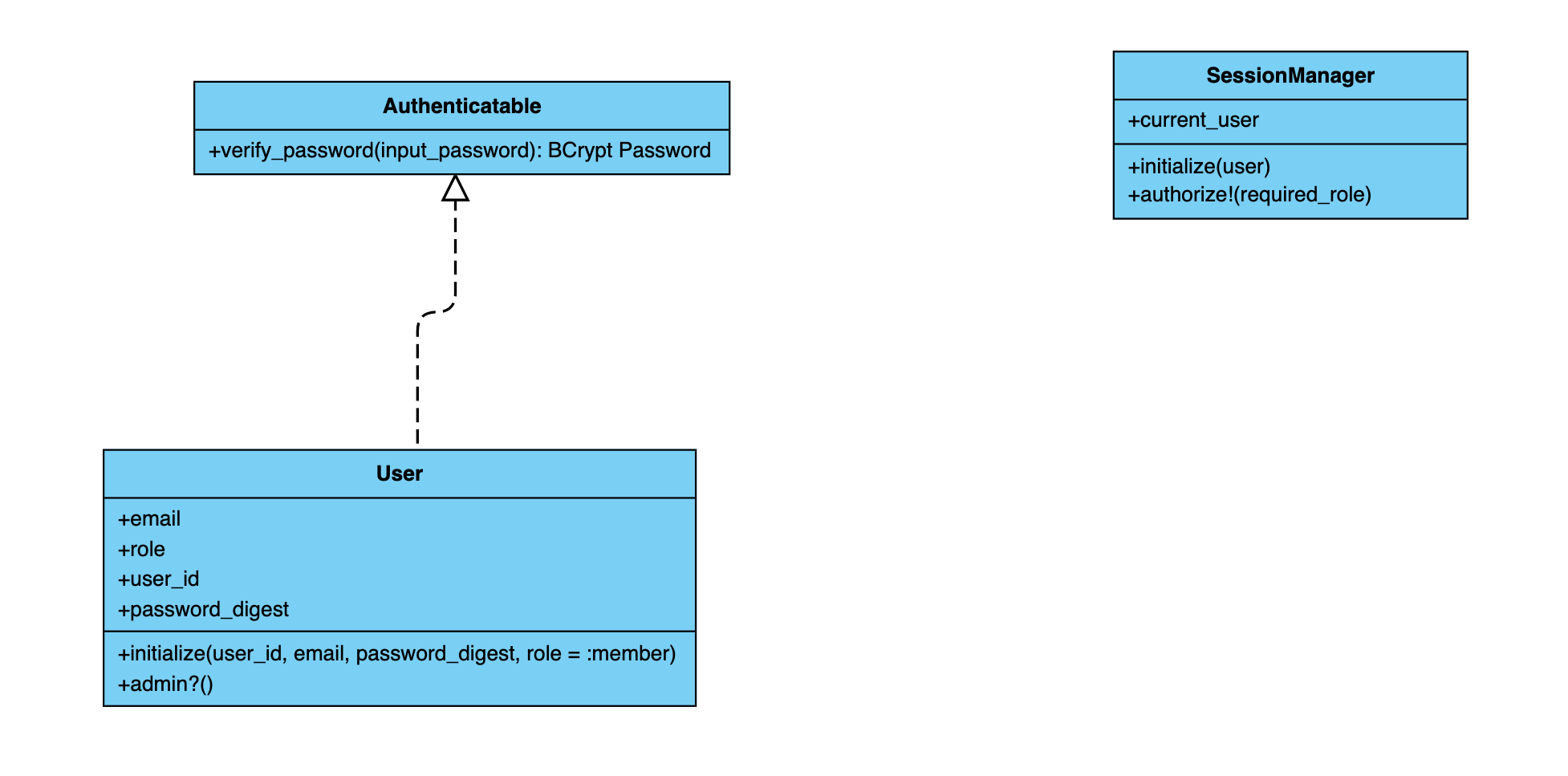
战略最佳实践
- 显式声明属性读取器/访问器: 使用
attr_reader,attr_writer,或attr_accessor在类定义的顶部使用,以便属性被识别并作为显式字段呈现。 - 利用模块实现共享行为: 将可重用的功能分离到
module混入模块中,并使用include来保持视觉关系的解耦。 - 保持继承链清晰: 倾向于使用浅层类层次结构(
class Child < Parent) 与模块混入结合,实现更简洁的视觉布局节点树。