


When architecting enterprise applications, ASP.NET Core web services, or Unity game systems in C#, reading dense class files and entity frameworks can make it difficult to visualize application structure. The C# Visualizer transforms C# class definitions, interfaces, record types, and inheritance hierarchies into clear, interactive class diagrams. By parsing properties, access modifiers, interface contracts, and class inheritance, .NET developers and software architects can visually inspect domain models and software designs at a glance.
The Mechanics of C# Visualizations
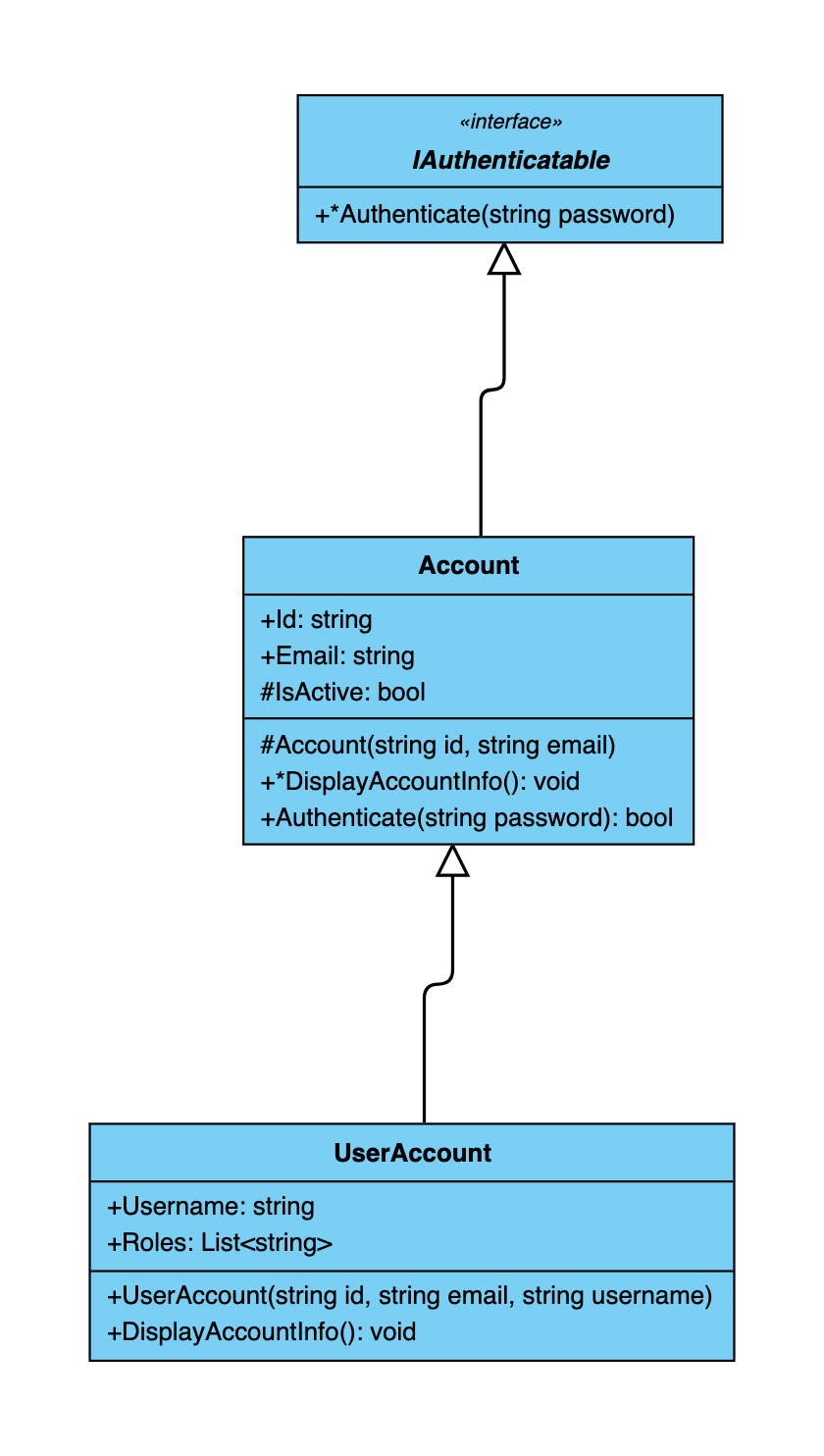
In VPasCode, C# rendering automatically parses class, interface, and record declarations, property accessors ({ get; set; }), and inheritance relationships into structured UML-style diagrams. Classes render as primary entity blocks, visibility levels display clearly on properties and methods, and inheritance (: BaseClass, IInterface) automatically generates relationship connectors between visual nodes.
1. Essential Setup
To visualize a standard C# domain model, define interfaces, abstract base classes, and concrete derived classes. Core domain models like user identity systems demonstrate fundamental class relationships and interface implementations:
namespace AccountSystem;

// Interface defining user authentication capabilities
public interface IAuthenticatable
{
    bool Authenticate(string password);
}

// Abstract base class for account management
public abstract class Account : IAuthenticatable
{
    public string Id { get; init; }
    public string Email { get; set; }
    protected bool IsActive { get; set; } = true;

    protected Account(string id, string email)
    {
        Id = id;
        Email = email;
    }

    public abstract void DisplayAccountInfo();

    public bool Authenticate(string password)
    {
        // Default authentication check
        return IsActive && !string.IsNullOrEmpty(password);
    }
}

// Concrete user account class
public class UserAccount : Account
{
    public string Username { get; set; }
    public List Roles { get; } = new();

    public UserAccount(string id, string email, string username)
        : base(id, email)
    {
        Username = username;
    }

    public override void DisplayAccountInfo()
    {
        Console.WriteLine($"User: {Username} ({Email})");
    }
}
Advanced Structural Techniques
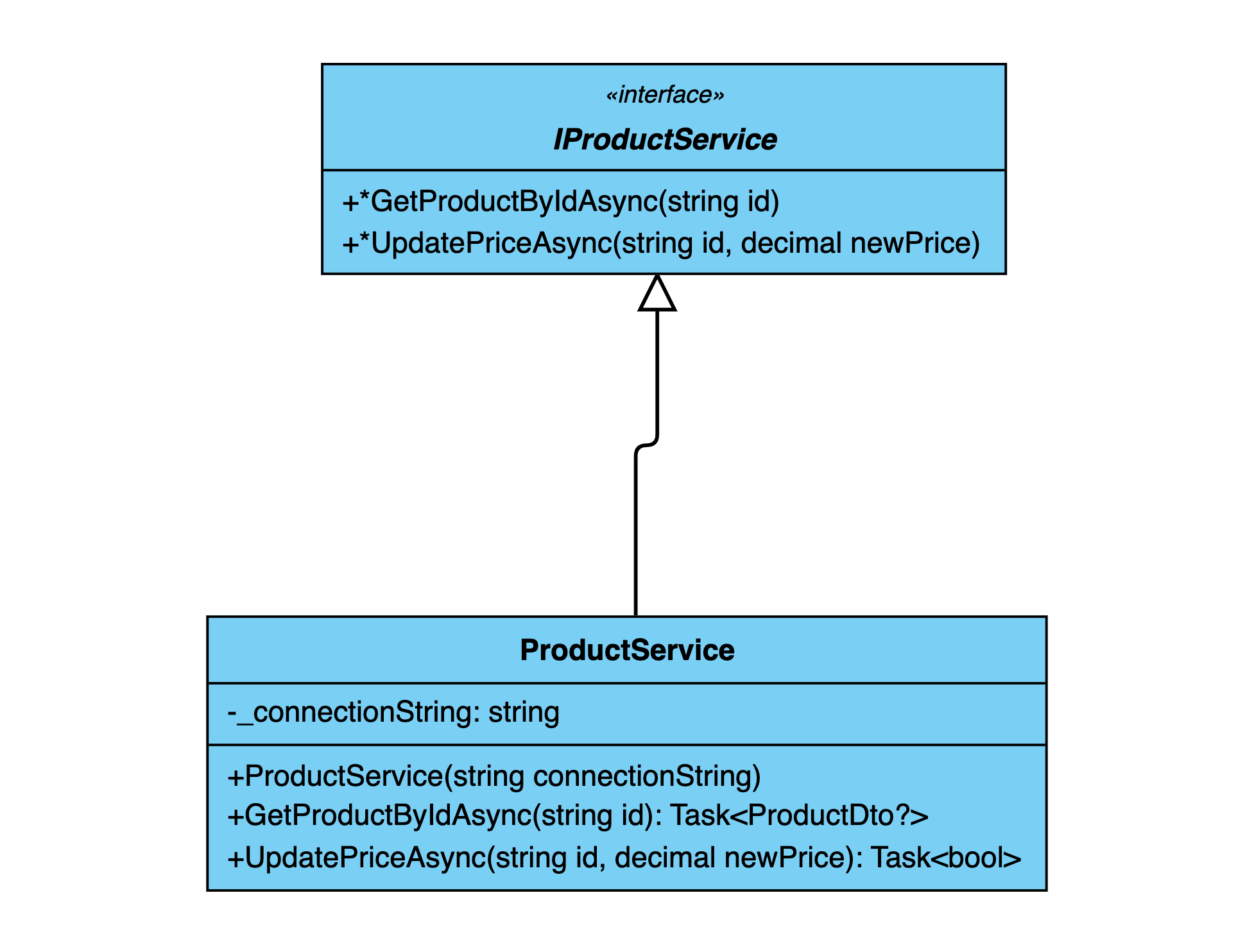
C# visualizations excel at mapping out modern immutable data models (C# records), dependency injection contracts, and ASP.NET Core service layers.
1. Immutable Records and Service Layer Model
By combining positional C# records for data transfer with interface-driven service contracts, VPasCode transforms modern .NET APIs into clean, structured diagram networks:
namespace ECommerce;

// Immutable C# record representation for product payloads
public record ProductDto(string Id, string Name, decimal Price, bool InStock);

public interface IProductService
{
    Task<ProductDto?> GetProductByIdAsync(string id);
    Task UpdatePriceAsync(string id, decimal newPrice);
}

public class ProductService : IProductService
{
    private readonly string _connectionString;

    public ProductService(string connectionString)
    {
        _connectionString = connectionString;
    }

    public async Task<ProductDto?> GetProductByIdAsync(string id)
    {
        return new ProductDto(id, "Wireless Mouse", 29.99m, true);
    }

    public async Task UpdatePriceAsync(string id, decimal newPrice)
    {
        return true;
    }
}
Structuring Entity Framework Data Models and Repositories
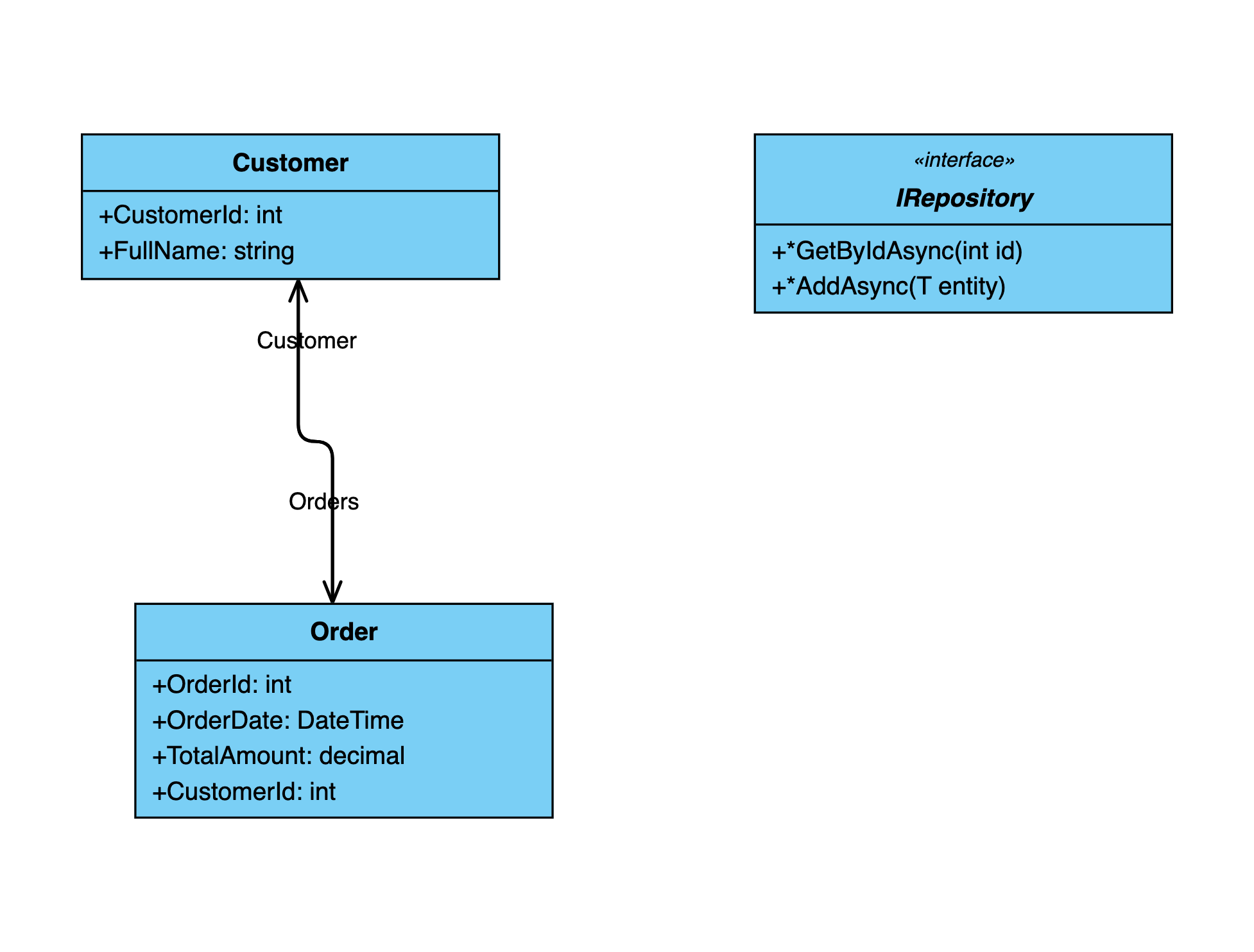
Visualizing Entity Framework Core DbContext entities, navigation properties, and repository patterns helps backend teams audit database mapping contracts and domain boundaries.
1. Entity Framework Core Order Management Domain
Group database entities, navigation collection properties, and repository abstractions to map clear data flow boundaries:
namespace DataAccess;

public class Customer
{
    public int CustomerId { get; set; }
    public string FullName { get; set; } = string.Empty;
    public ICollection Orders {; set; } = new List();
}

public class Order
{
    public int OrderId { get; set; }
    public DateTime OrderDate { get; set; }
    public decimal TotalAmount { get; set; }

    public int CustomerId { get; set; }
    public Customer Customer {; set; } = null!;
}

public interface IRepository where T : class
{
    Task<T?> GetByIdAsync(int id);
    Task AddAsync(T entity);
}
Strategic Best Practices
- Follow C# Naming Conventions: Prefix interface names with
I(e.g.,IProductService) so contracts stand out clearly in visual class trees. - Use Records for Immutable DTOs: Define value-based data transfer objects with C#
recordstructures to distinguish domain entities from data contracts. - Leverage Auto-Properties: Use modern auto-implemented property syntax (
{ get; set; }or{ get; init; }) to keep diagram cards concise and uncluttered.