


When building modern web applications, REST APIs, or custom enterprise modules in PHP, navigating complex object-oriented architectures and class hierarchies can quickly become challenging. The PHP Visualizer transforms PHP classes, interfaces, traits, and enums into clear, interactive UML class diagrams. By parsing PHP type declarations, access modifiers (public, protected, private), property declarations, and class relationships (extends, implements), web developers and backend architects can visually inspect application structure at a glance.
The Mechanics of PHP Visualizations
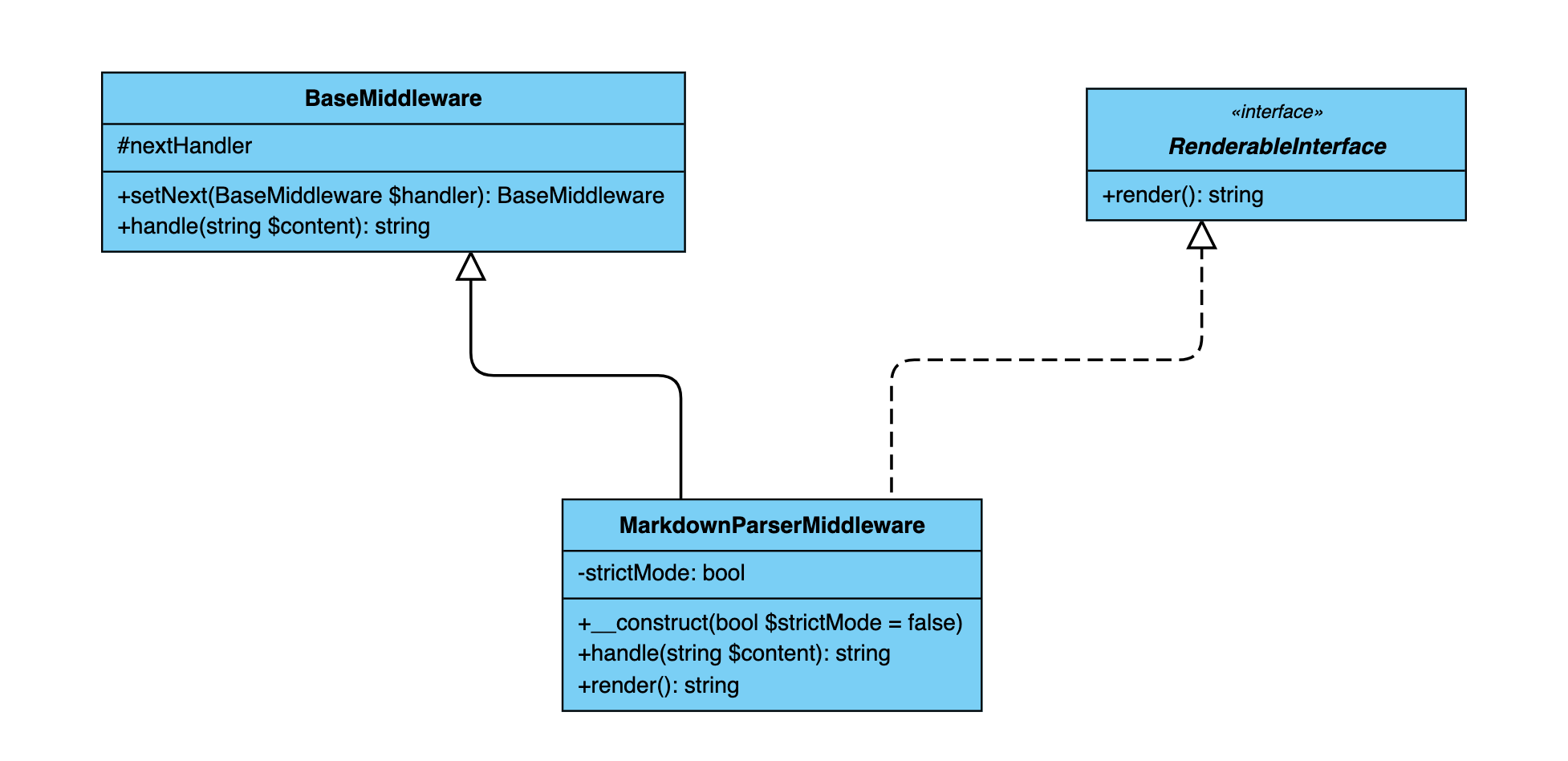
In VPasCode, PHP rendering automatically parses class statements, interface definitions, enum types, explicit property declarations, and type hints into structured visual diagram cards. Classes render as primary entity blocks, visibility flags reflect member access levels, and inheritance keywords generate clear structural relationship lines between visual nodes.
1. Essential Setup
To visualize a standard PHP architecture, define interfaces, abstract base handlers, and concrete class implementations using standard PHP type hints. A content processing pipeline for web publishing demonstrates fundamental class contracts:
<?php

namespace App\Content;

interface RenderableInterface {
    public function render(): string;
}

abstract class BaseMiddleware {
    protected ?BaseMiddleware $nextHandler = null;

    public function setNext(BaseMiddleware $handler): BaseMiddleware {
        $this->nextHandler = $handler;
        return $handler;
    }

    abstract public function handle(string $content): string;
}

class MarkdownParserMiddleware extends BaseMiddleware implements RenderableInterface {
    private bool $strictMode;

    public function __construct(bool $strictMode = false) {
        $this->strictMode = $strictMode;
    }

    public function handle(string $content): string {
        $parsed = "<p>" . htmlspecialchars($content) . "</p>";

        if ($this->nextHandler !== null) {
            return $this->nextHandler->handle($parsed);
        }

        return $parsed;
    }

    public function render(): string {
        return $this->handle("Sample Content");
    }
}
Advanced Structural Techniques
PHP visualizations excel at mapping out logistics platforms, fulfillment calculators, and payment gateway strategies utilizing PHP backed Enums.
1. E-Commerce Shipping & Logistics Engine
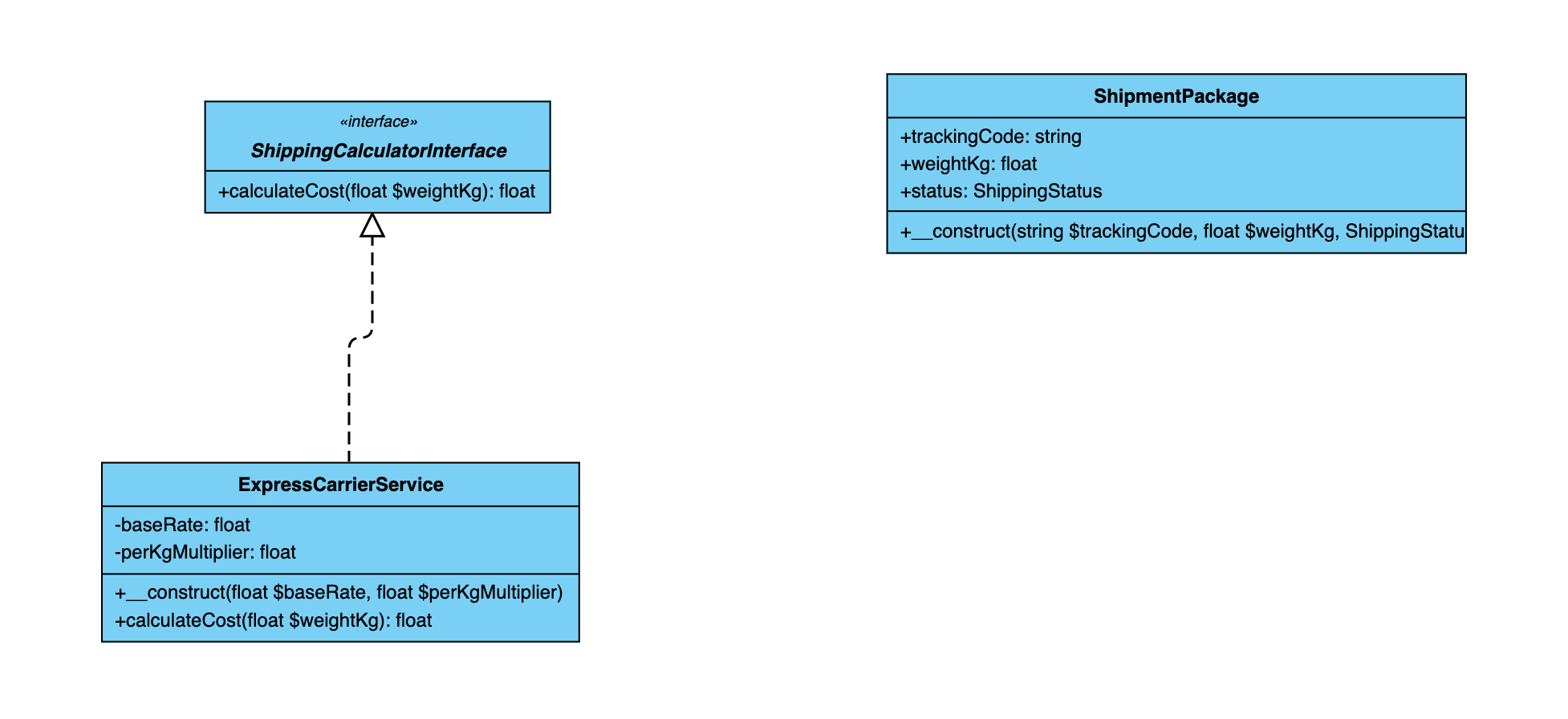
By combining backed Enums, structured value objects, and strategy pattern interfaces, VPasCode cleanly breaks down complex business logic into readable visual trees:
<?php

namespace App\Logistics;

enum ShippingStatus: string {
    case Pending = 'pending';
    case InTransit = 'in_transit';
    case Delivered = 'delivered';
}

interface ShippingCalculatorInterface {
    public function calculateCost(float $weightKg): float;
}

class ShipmentPackage {
    public string $trackingCode;
    public float $weightKg;
    public ShippingStatus $status;

    public function __construct(string $trackingCode, float $weightKg, ShippingStatus $status = ShippingStatus::Pending) {
        $this->trackingCode = $trackingCode;
        $this->weightKg = $weightKg;
        $this->status = $status;
    }
}

class ExpressCarrierService implements ShippingCalculatorInterface {
    private float $baseRate;
    private float $perKgMultiplier;

    public function __construct(float $baseRate, float $perKgMultiplier) {
        $this->baseRate = $baseRate;
        $this->perKgMultiplier = $perKgMultiplier;
    }

    public function calculateCost(float $weightKg): float {
        return $this->baseRate + ($weightKg * $this->perKgMultiplier);
    }
}
Structuring API Authentication and Token Management
Visualizing OAuth token services, user credential providers, and security guard classes helps backend engineers maintain clean authorization boundaries across web services.
1. OAuth Authentication and Token Service
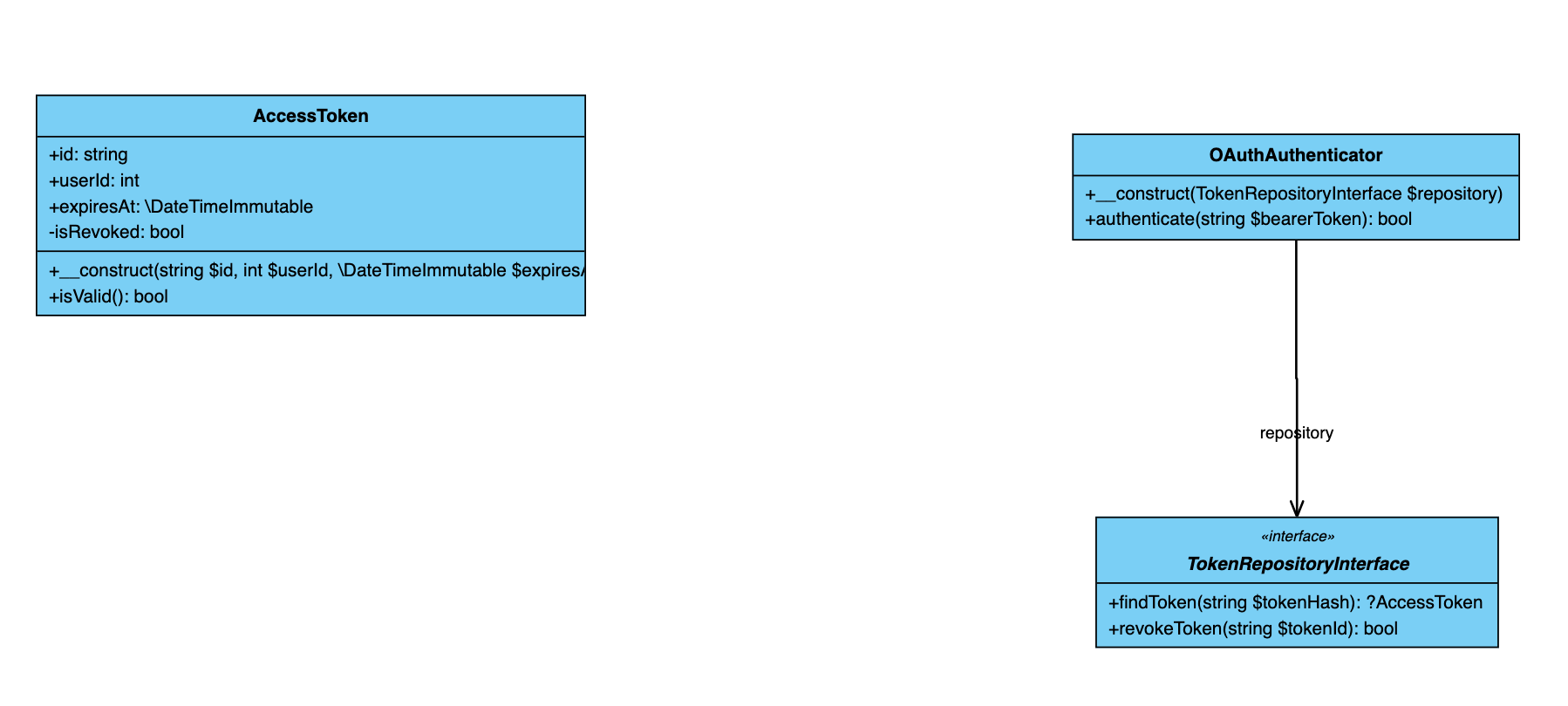
Group token repositories, user identity interfaces, and authentication managers to map out core security architecture:
<?php

namespace App\Security;

interface TokenRepositoryInterface {
    public function findToken(string $tokenHash): ?AccessToken;
    public function revokeToken(string $tokenId): bool;
}

class AccessToken {
    public string $id;
    public int $userId;
    public \DateTimeImmutable $expiresAt;
    private bool $isRevoked;

    public function __construct(string $id, int $userId, \DateTimeImmutable $expiresAt) {
        $this->id = $id;
        $this->userId = $userId;
        $this->expiresAt = $expiresAt;
        $this->isRevoked = false;
    }

    public function isValid(): bool {
        return !$this->isRevoked && $this->expiresAt > new \DateTimeImmutable();
    }
}

class OAuthAuthenticator {
    private TokenRepositoryInterface $repository;

    public function __construct(TokenRepositoryInterface $repository) {
        $this->repository = $repository;
    }

    public function authenticate(string $bearerToken): bool {
        $hash = hash('sha256', $bearerToken);
        $token = $this->repository->findToken($hash);

        return $token !== null && $token->isValid();
    }
}
Strategic Best Practices
- Declare Explicit Class Properties: Define fields directly in the class body rather than inline in constructor parameters so visualizers can list all properties cleanly.
- Use Backed Enums for Status States: Define fixed sets of options using native PHP
enumconstructs rather than string constants or class flags. - Specify Type Hints and Access Modifiers: Always declare return types and access visibility (
public,protected,private) so structural diagrams display complete class contracts.