


When architecting Ruby on Rails web applications, background worker pipelines, or domain models in Ruby, reading dynamic class definitions and module mixins can make it difficult to visualize object relationships. The Ruby Visualizer transforms Ruby classes, modules, mixin inclusions, and class hierarchies into clear, interactive class diagrams. By parsing attribute accessors (attr_accessor, attr_reader), module compositions (include, extend), and inheritance chains (<), Ruby developers and backend architects can visually inspect object-oriented domain structures at a glance.
The Mechanics of Ruby Visualizations
In VPasCode, Ruby rendering automatically parses class declarations, module mixins, attribute definitions, and method signatures into structured UML-style class cards. Classes and modules serve as primary visual nodes, attribute readers list as fields, and inheritance or mixin inclusion keywords automatically generate relationship connectors between visual entities.
1. Essential Setup
To visualize a standard Ruby class hierarchy, define modules for shared behaviors alongside base classes and child implementations. Payment processing interfaces demonstrate fundamental class inheritance and module composition in Ruby:
# Shared logging mixin
module Loggable
  def log_action(message)
    puts "[LOG] #{Time.now}: #{message}"
  end
end

# Base abstract-style payment gateway
class BaseGateway
  include Loggable

  attr_reader :api_key, :environment

  def initialize(api_key, environment = :sandbox)
    @api_key = api_key
    @environment = environment
  end

  def process_payment(amount)
    raise NotImplementedError, "Subclasses must implement process_payment"
  end
end

# Stripe implementation subclass
class StripeGateway < BaseGateway
  attr_accessor :stripe_account_id

  def initialize(api_key, stripe_account_id)
    super(api_key, :production)
    @stripe_account_id = stripe_account_id
  end

  def process_payment(amount)
    log_action("Processing $#{amount} via Stripe")
    true
  end
end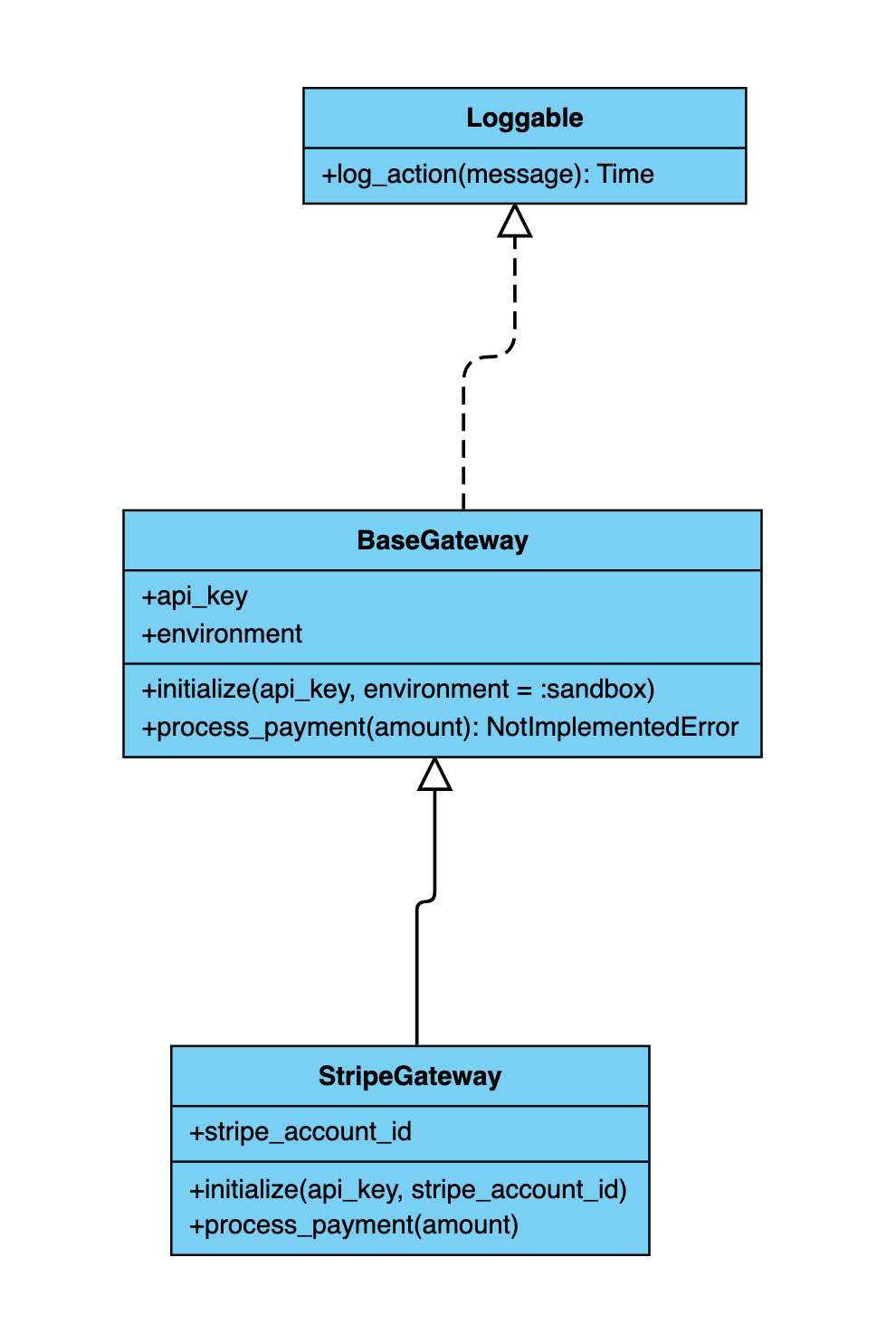
Advanced Structural Techniques
Ruby visualizations excel at mapping out e-commerce fulfillment flows, domain-driven value objects, and active record style entities.
1. E-Commerce Order Processing System
By combining state enumeration symbols, line item objects, and aggregate order entities, VPasCode transforms Ruby domain models into clear, structured diagram networks:
module Shippable
  def calculate_shipping_weight
    line_items.sum(&:weight)
  end
end

class LineItem
  attr_reader :sku, :price, :quantity, :weight

  def initialize(sku, price, quantity, weight = 1.0)
    @sku = sku
    @price = price
    @quantity = quantity
    @weight = weight
  end

  def total_price
    @price * @quantity
  end
end

class Order
  include Shippable

  attr_reader :order_id, :status, :line_items

  def initialize(order_id)
    @order_id = order_id
    @status = :pending
    @line_items = []
  end

  def add_item(item)
    @line_items << item
  end

  def grand_total
    @line_items.sum(&:total_price)
  end
end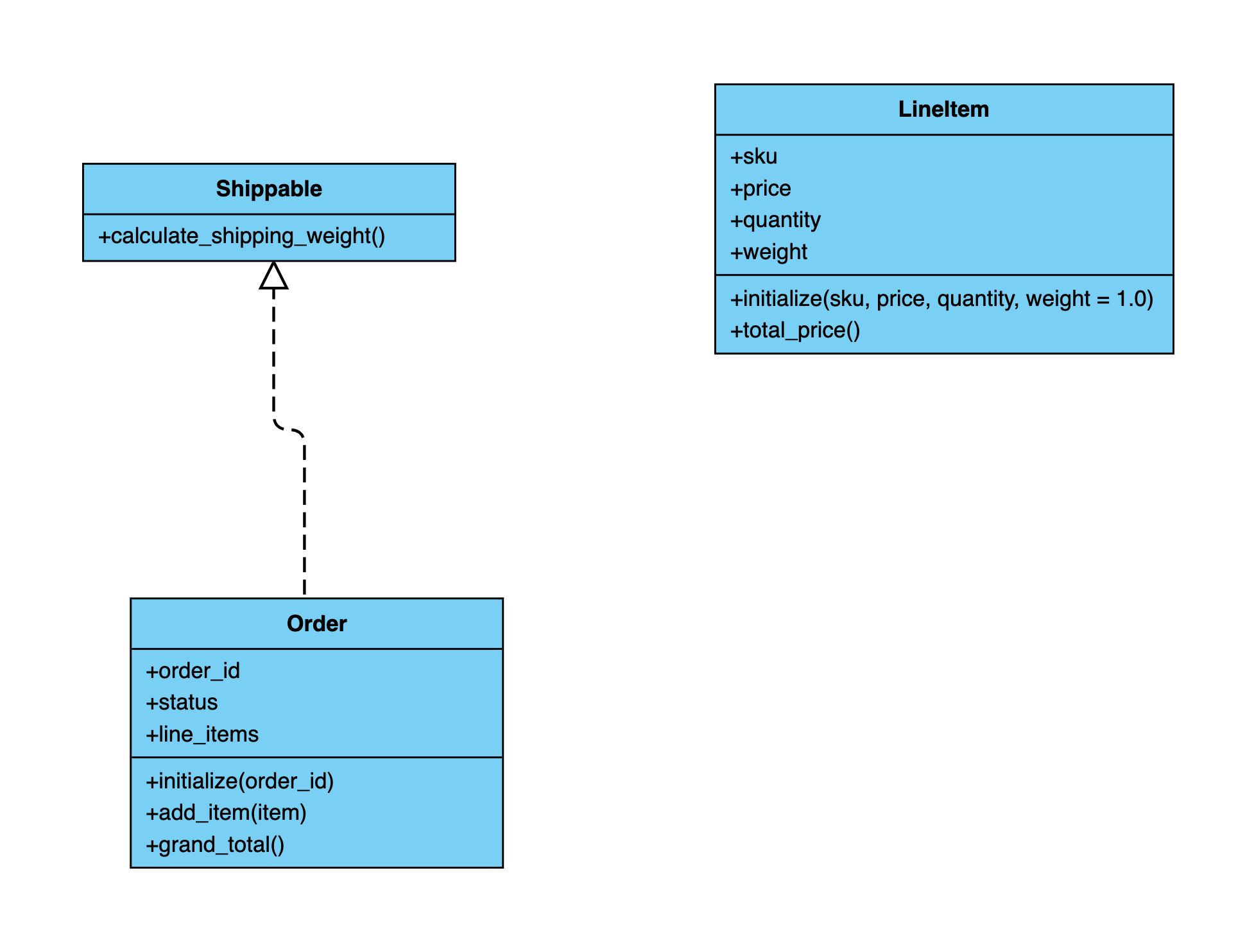
Structuring User Authentication and Security Modules
Visualizing authentication strategies, token generation modules, and role permission handlers helps backend engineers maintain clean security boundaries in Ruby applications.
1. User Authentication and Permission Module
Group credential checkers, token generators, and user identity classes to map out authorization boundaries:
module Authenticatable
  def verify_password(input_password)
    BCrypt::Password.new(password_digest) == input_password
  end
end

class User
  include Authenticatable

  attr_accessor :email, :role
  attr_reader :user_id, :password_digest

  def initialize(user_id, email, password_digest, role = :member)
    @user_id = user_id
    @email = email
    @password_digest = password_digest
    @role = role
  end

  def admin?
    @role == :admin
  end
end

class SessionManager
  attr_reader :current_user

  def initialize(user)
    @current_user = user
  end

  def authorize!(required_role)
    return true if @current_user.admin?
    @current_user.role == required_role
  end
end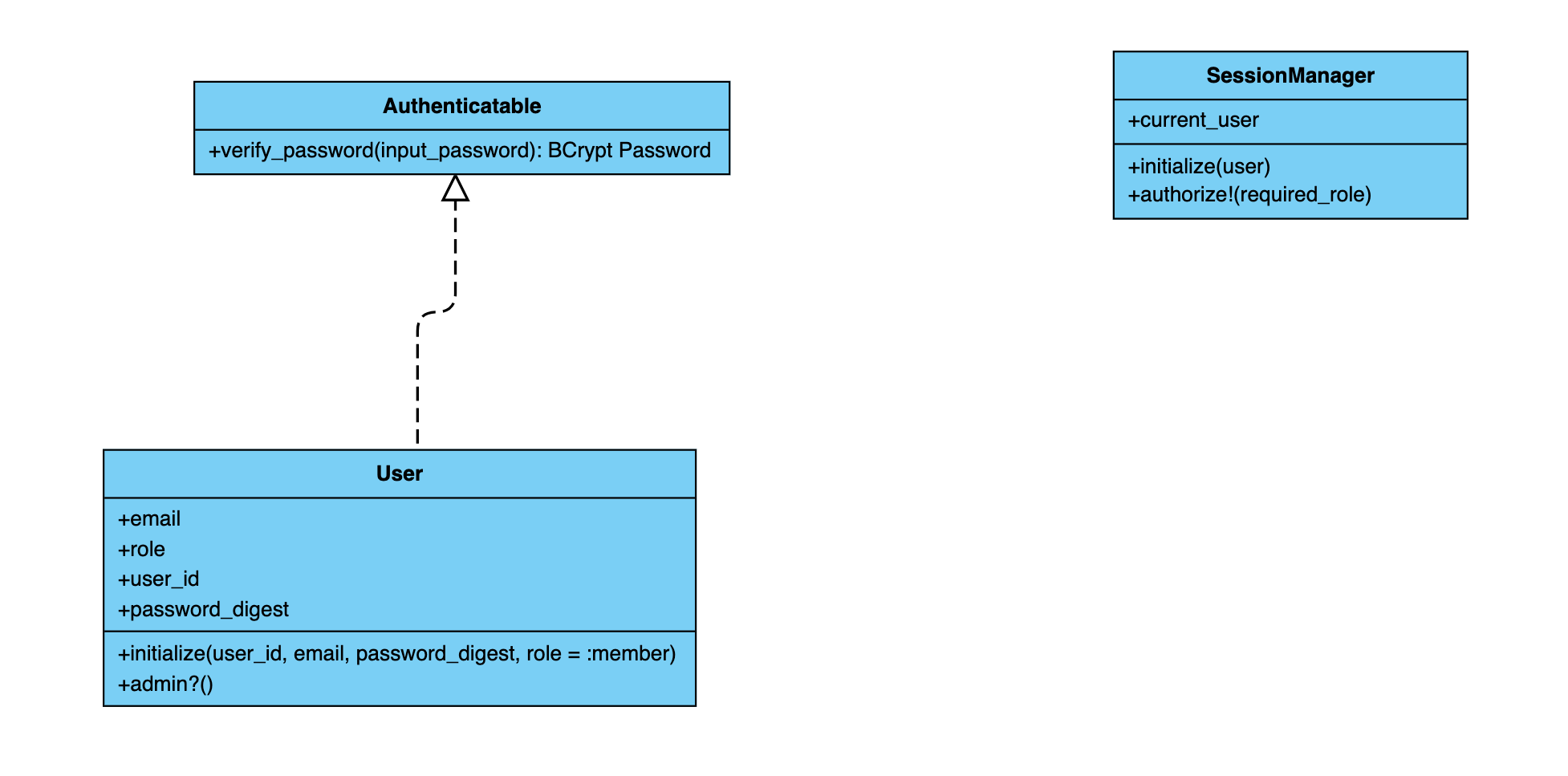
Strategic Best Practices
- Declare Explicit Attribute Readers/Accessors: Use
attr_reader,attr_writer, orattr_accessorat the top of class definitions so properties are recognized and rendered as explicit fields. - Leverage Modules for Shared Behavior: Separate reusable functionalities into
modulemixins and useincludeto keep visual relationships decoupled. - Keep Inheritance Chains Clear: Prefer shallow class hierarchies (
class Child < Parent) combined with module mixins for cleaner visual layout node trees.