


When architecting machine learning pipelines, Django/FastAPI web backends, or automation scripts in Python, reading dense class files and object structures can make it difficult to visualize overall system architecture. The Python Visualizer transforms Python class definitions, type hints, abstract base classes, and dataclasses into clear, interactive class diagrams. By parsing class attributes, method signatures, inheritance chains, and type annotations, backend developers and data engineers can visually inspect object-oriented designs and module relationships at a glance.
The Mechanics of Python Visualizations
In VPasCode, Python rendering automatically parses class statements, @dataclass decorators, type hints (using typing modules), and abstract base class contracts into structured UML-style diagrams. Classes render as primary entity cards, annotated instance attributes list as typed fields, and explicit inheritance (class Derived(Base):) automatically generates relationship connectors between visual nodes.
1. Essential Setup
To visualize a standard Python class hierarchy, define abstract base classes using abc.ABC alongside concrete subclass implementations and type hints. Core domain models like task processing queues demonstrate fundamental class relationships:
from abc import ABC, abstractmethod
from typing import List, Optional
from datetime import datetime

class TaskObserver(ABC):
    @abstractmethod
    def on_task_completed(self, task_id: str) -> None:
        pass

class BaseTask(ABC):
    def __init__(self, task_id: str, priority: int = 1):
        self.task_id: str = task_id
        self.priority: int = priority
        self.created_at: datetime = datetime.now()
        self._status: str = "pending"

    @property
    def status(self) -> str:
        return self._status

    @abstractmethod
    def execute(self) -> bool:
        pass

class EmailTask(BaseTask):
    def __init__(self, task_id: str, recipient: str, subject: str):
        super().__init__(task_id, priority=2)
        self.recipient: str = recipient
        self.subject: str = subject

    def execute(self) -> bool:
        print(f"Sending email to {self.recipient}")
        self._status = "completed"
        return True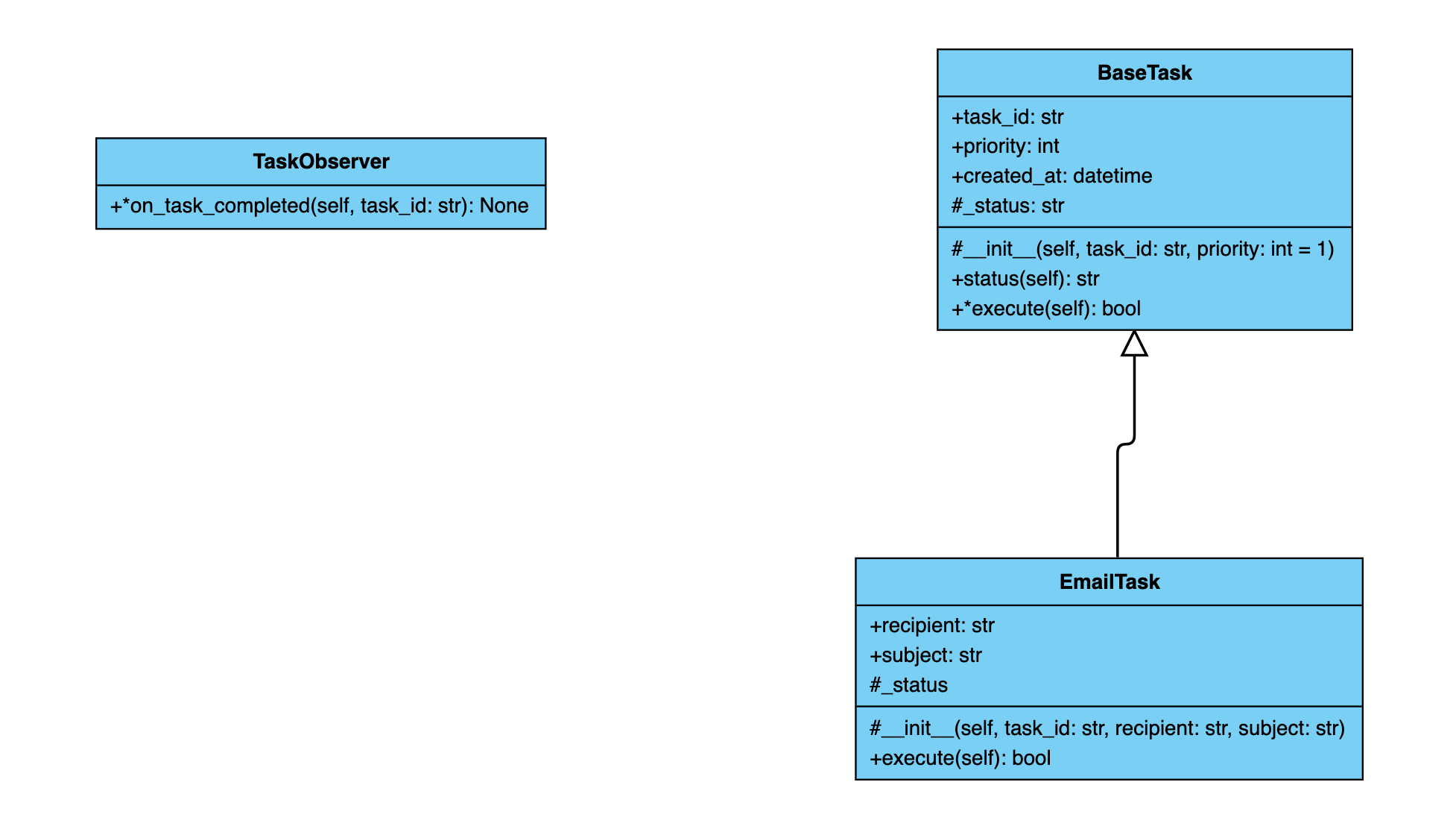
Advanced Structural Techniques
Python visualizations excel at mapping out modern data models built with @dataclass, Pydantic models, and FastAPI request/response contracts.
1. Dataclasses and E-Commerce Domain Model
By combining @dataclass structures with explicit type annotations and field defaults, VPasCode transforms modern Python data models into clean, structured diagram networks:
from dataclasses import dataclass, field
from typing import List, Optional

@dataclass
class Item:
    sku: str
    name: str
    unit_price: float
    quantity: int = 1

@dataclass
class Customer:
    customer_id: str
    email: str
    is_vip: bool = False

@dataclass
class Order:
    order_id: str
    customer: Customer
    items: List[Item] = field(default_factory=list)
    discount_code: Optional[str] = None

    def calculate_total(self) -> float:
        total = sum(item.unit_price * item.quantity for item in self.items)
        return total * 0.9 if self.is_vip_order() else total

    def is_vip_order(self) -> bool:
        return self.customer.is_vip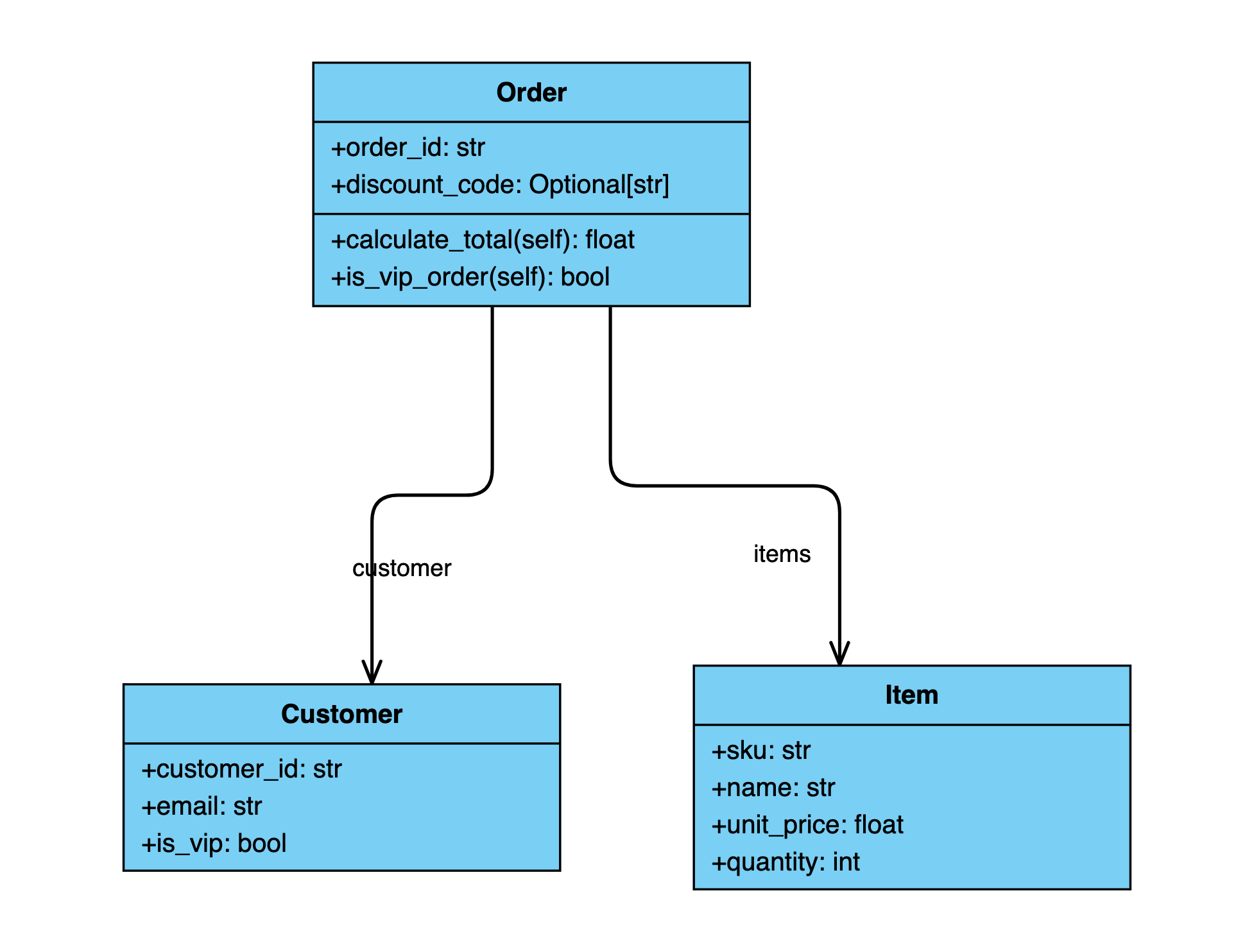
Structuring Machine Learning Pipelines and Repositories
Visualizing machine learning model wrappers, dataset loaders, and repository abstractions helps data scientists and ML engineers maintain clean modularity across AI workflows.
1. Machine Learning Model Pipeline Architecture
Group data prep routines, model wrappers, and evaluation metric reporters to map clear machine learning pipeline boundaries:
from abc import ABC, abstractmethod
from typing import Any, Dict

class DatasetLoader(ABC):
    @abstractmethod
    def load_data(self) -> Dict[str, Any]:
        pass

class BaseEstimator(ABC):
    def __init__(self, model_name: str):
        self.model_name: str = model_name
        self.is_trained: bool = False

    @abstractmethod
    def fit(self, X: Any, y: Any) -> None:
        pass

    @abstractmethod
    def predict(self, X: Any) -> Any:
        pass

class ClassificationPipeline(BaseEstimator):
    def __init__(self, model_name: str, learning_rate: float = 0.01):
        super().__init__(model_name)
        self.learning_rate: float = learning_rate

    def fit(self, X: Any, y: Any) -> None:
        print(f"Training {self.model_name} with lr={self.learning_rate}")
        self.is_trained = True

    def predict(self, X: Any) -> Any:
        if not self.is_trained:
            raise RuntimeError("Model must be trained before predicting.")
        return [0] * len(X)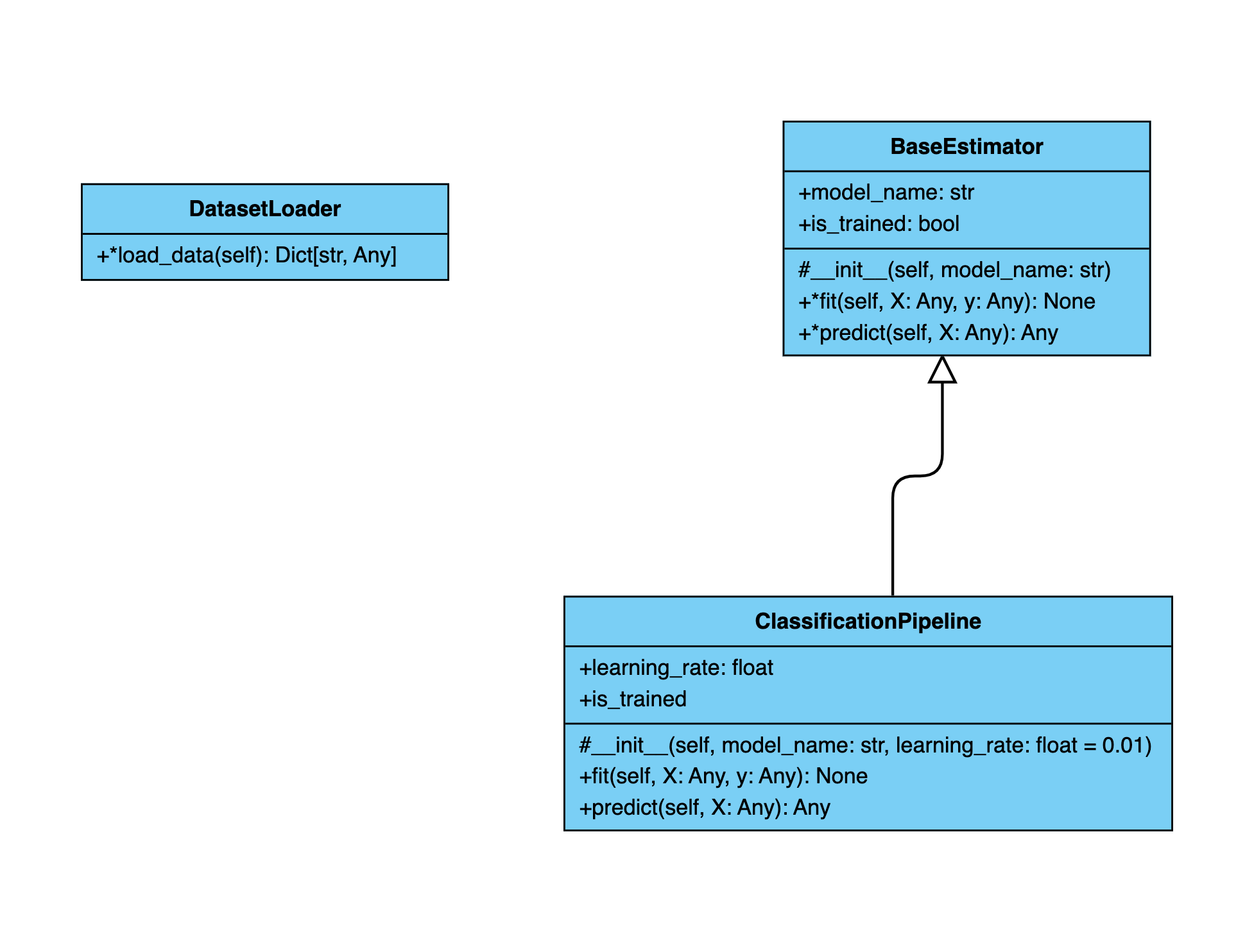
Strategic Best Practices
- Use Standard Type Hints: Always include type annotations (e.g.,
name: str,items: List[Item]) so class diagrams render clear property signatures. - Leverage Dataclasses for Data Containers: Use
@dataclassfor clean data storage objects to separate pure data schemas from business logic. - Use ABCs for Interfaces: Inherit from
abc.ABCand decorate abstract methods with@abstractmethodto define clear behavioral contracts.