


When building high-performance systems, game engines, or low-level embedded software in Zig, navigating comptime generics, tagged unions, and explicit memory management models can make it difficult to visualize overall system architecture. The Zig Visualizer transforms Zig structs, tagged unions (union(enum)), error sets, and function pointers into clear, interactive architectural diagrams. By parsing data structures, member types, explicit allocator linkages, and method contracts, systems programmers and firmware engineers can visually inspect low-level Zig code structures at a glance.
The Mechanics of Zig Visualizations
In VPasCode, Zig rendering automatically parses struct declarations, union(enum) tagged blocks, error sets, and function definitions into structured visual diagram cards. Structs render as primary entity blocks, pointer/slice fields display memory boundaries, and function pointer or comptime interface declarations generate clear structural relationship lines between visual nodes.
1. Essential Setup
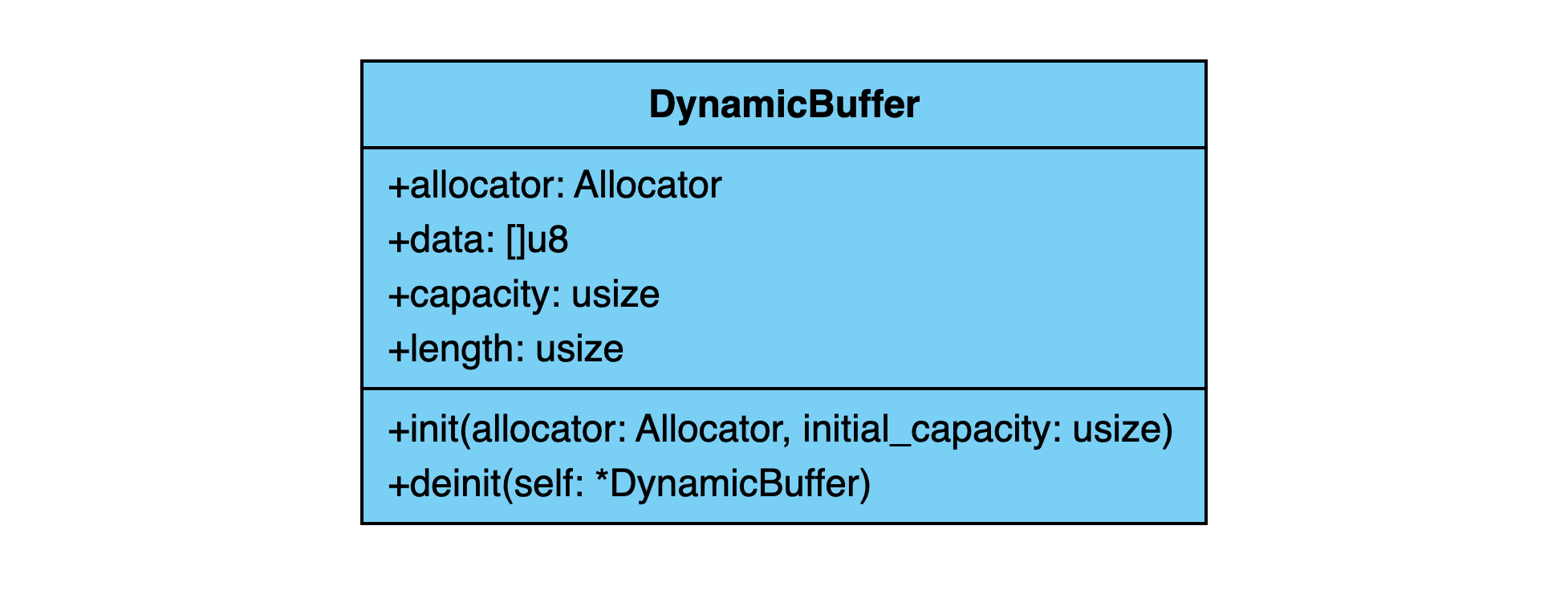
To visualize a standard Zig module, define structs, error sets, and explicit memory allocation boundaries. A memory-managed buffer container demonstrates fundamental Zig data structures and manual allocator management:
const std = @import("std");
const Allocator = std.mem.Allocator;

pub const BufferError = error{
    OutOfMemory,
    BufferOverflow,
    InvalidCapacity,
};

pub const DynamicBuffer = struct {
    allocator: Allocator,
    data: []u8,
    capacity: usize,
    length: usize,

    pub fn init(allocator: Allocator, initial_capacity: usize) BufferError!DynamicBuffer {
        if (initial_capacity == 0) return BufferError.InvalidCapacity;
        const memory = allocator.alloc(u8, initial_capacity) catch return BufferError.OutOfMemory;

        return DynamicBuffer{
            .allocator = allocator,
            .data = memory,
            .capacity = initial_capacity,
            .length = 0,
        };
    }

    pub fn deinit(self: *DynamicBuffer) void {
        self.allocator.free(self.data);
    }
};
Advanced Structural Techniques
Zig visualizations excel at mapping out hardware registers, tagged state unions, and embedded micro-controller drivers.
1. Embedded Peripheral GPIO Controller
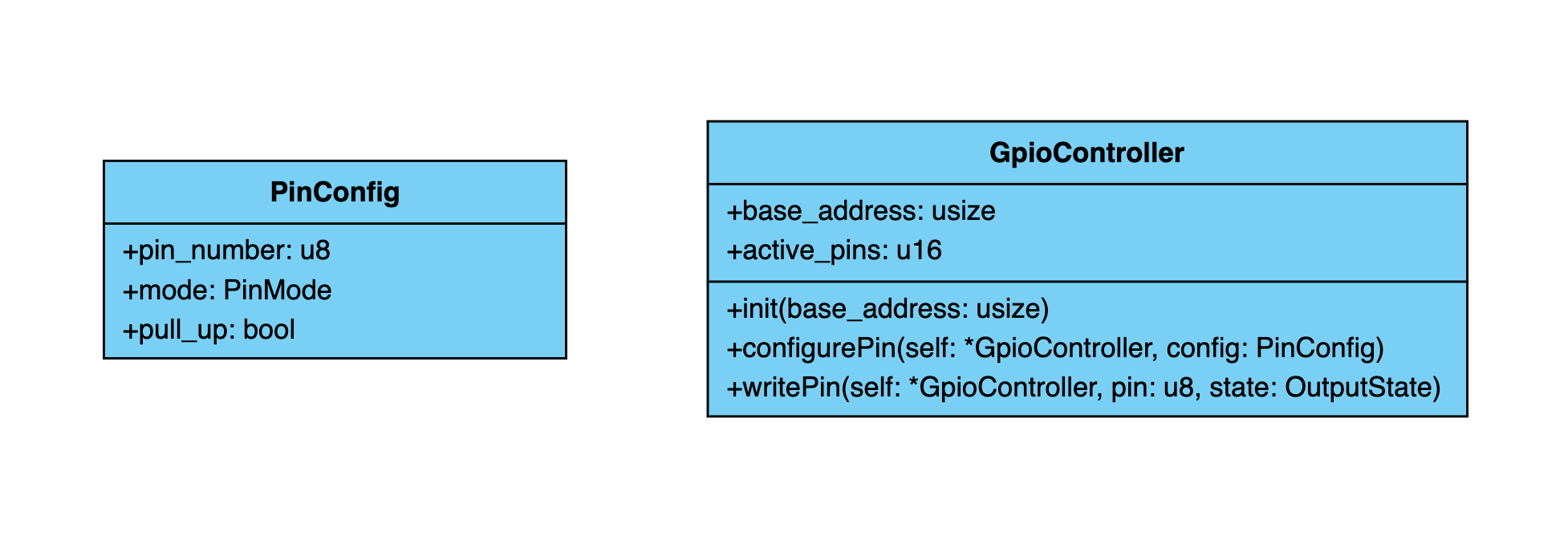
By combining packed enums, tagged union configurations, and device handle structs, VPasCode cleanly breaks down low-level firmware architecture into readable visual trees:
pub const PinMode = enum {
    input,
    output,
    alternate_function,
};

pub const OutputState = enum {
    low,
    high,
};

pub const PinConfig = struct {
    pin_number: u8,
    mode: PinMode,
    pull_up: bool = false,
};

pub const GpioController = struct {
    base_address: usize,
    active_pins: u16,

    pub fn init(base_address: usize) GpioController {
        return GpioController{
            .base_address = base_address,
            .active_pins = 0,
        };
    }

    pub fn configurePin(self: *GpioController, config: PinConfig) void {
        _ = self;
        _ = config;
    }

    pub fn writePin(self: *GpioController, pin: u8, state: OutputState) void {
        _ = self;
        _ = pin;
        _ = state;
    }
};
Structuring Event Loops and Tagged Task Pipelines
Visualizing asynchronous event loops, task payloads using tagged unions (union(enum)), and execution queues helps backend systems engineers manage safe memory layouts.
1. Custom Async Event Loop and Task Queue
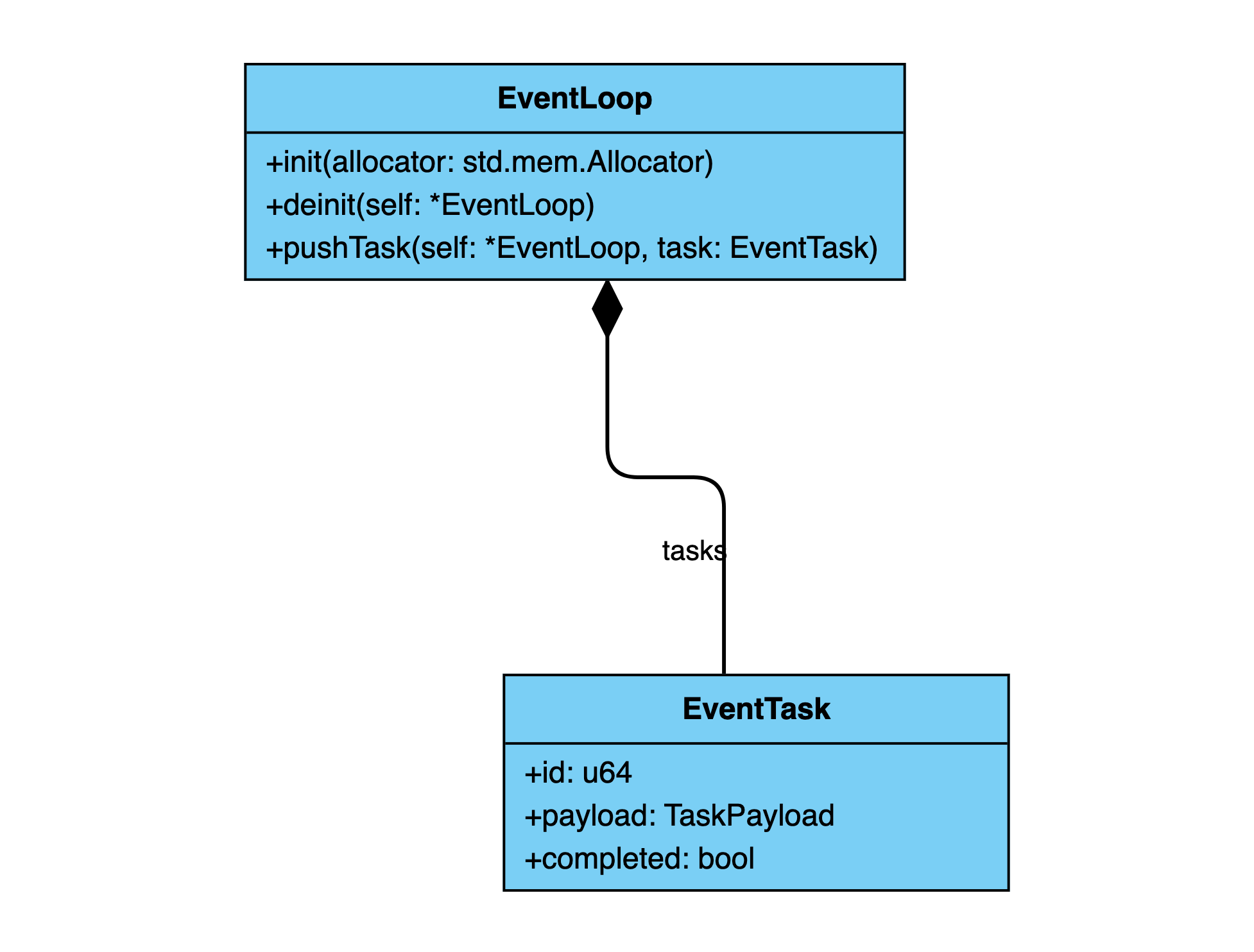
Group task payloads, job state unions, and event loop managers to map out task processing boundaries:
const std = @import("std");

pub const TaskType = enum {
    network_read,
    disk_write,
    timer_expired,
};

pub const TaskPayload = union(TaskType) {
    network_read: struct { socket_fd: i32, bytes_expected: usize },
    disk_write: struct { file_path: []const u8, data: []const u8 },
    timer_expired: struct { timer_id: u64 },
};

pub const EventTask = struct {
    id: u64,
    payload: TaskPayload,
    completed: bool,
};

pub const EventLoop = struct {
    tasks: std.ArrayList(EventTask),

    pub fn init(allocator: std.mem.Allocator) EventLoop {
        return EventLoop{
            .tasks = std.ArrayList(EventTask).init(allocator),
        };
    }

    pub fn deinit(self: *EventLoop) void {
        self.tasks.deinit();
    }

    pub fn pushTask(self: *EventLoop, task: EventTask) !void {
        try self.tasks.append(task);
    }
};
Strategic Best Practices
- Use Explicit Struct Declarations: Keep struct fields typed cleanly (e.g.,
allocator: Allocator) so property nodes render with explicit type labels. - Leverage Tagged Unions (
union(enum)): Model variant payloads using tagged unions rather than untyped raw memory blocks for type-safe visual representation. - Mark Comptime Parameters Explicitly: Use clear naming for comptime generics or interface contracts so high-level type parameters remain legible on visual node cards.