When developing embedded firmware, operating system kernels, or high-performance systems in C, navigating raw header files and struct declarations can make it difficult to visualize software architecture. The
C Code Visualizer transforms C structures (
struct), tagged unions (
union), function pointer interfaces, and modular header dependencies into clear, interactive architectural diagrams. By parsing data structures, member types, and functional linkages, firmware engineers and systems programmers can visually inspect low-level system designs at a glance.
The Mechanics of C Visualizations
In VPasCode, C rendering automatically parses
typedef struct definitions,
union data blocks, function pointer callbacks, and header prototypes into structured visual diagrams. Structs serve as primary entity cards, pointer fields display memory references, and function pointer fields generate interface relationship links between visual nodes.
1. Essential Setup
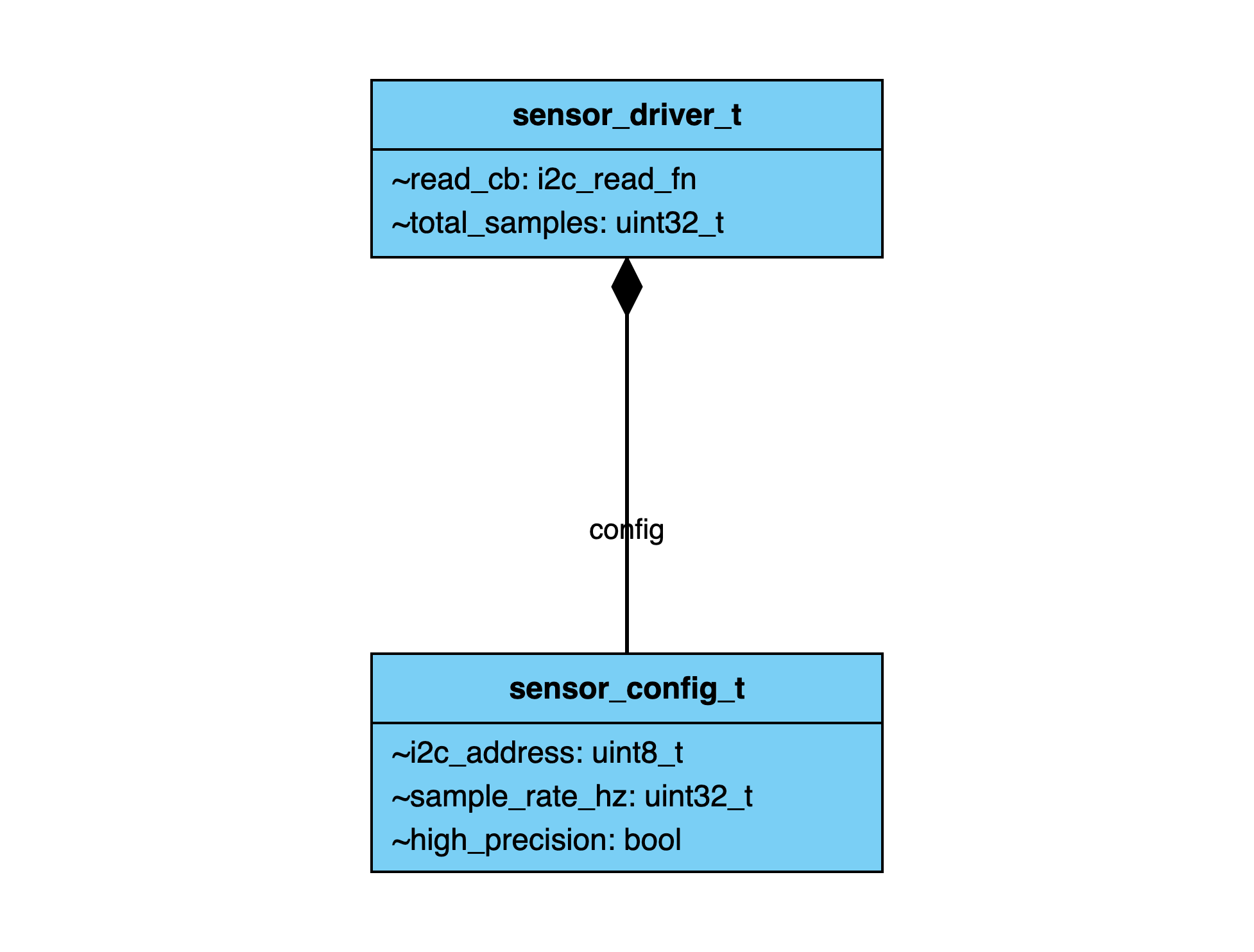
To visualize a standard C module, define structs, enum flags, and function pointer callbacks. Embedded device drivers demonstrate fundamental C data structures and hardware abstraction layers:
#ifndef SENSOR_DRIVER_H
#define SENSOR_DRIVER_H

#include <stdint.h>
#include <stdbool.h>

// Sensor status flags
typedef enum {
    SENSOR_OK = 0,
    SENSOR_ERR_TIMEOUT,
    SENSOR_ERR_OVERFLOW
} sensor_status_t;

// Sensor hardware reading configuration
typedef struct {
    uint8_t i2c_address;
    uint32_t sample_rate_hz;
    bool high_precision;
} sensor_config_t;

// Function pointer contract for hardware I2C read
typedef sensor_status_t (*i2c_read_fn)(uint8_t addr, uint8_t *buffer, uint16_t len);

// Main sensor driver control handle
typedef struct {
    sensor_config_t config;
    i2c_read_fn read_cb;
    uint32_t total_samples;
} sensor_driver_t;

sensor_status_t sensor_init(sensor_driver_t *driver, sensor_config_t config, i2c_read_fn read_cb);

#endif // SENSOR_DRIVER_H
Advanced Structural Techniques
C visualizations excel at mapping out kernel data structures, process control blocks (PCBs), and task execution queues.
1. Operating System Process Scheduler
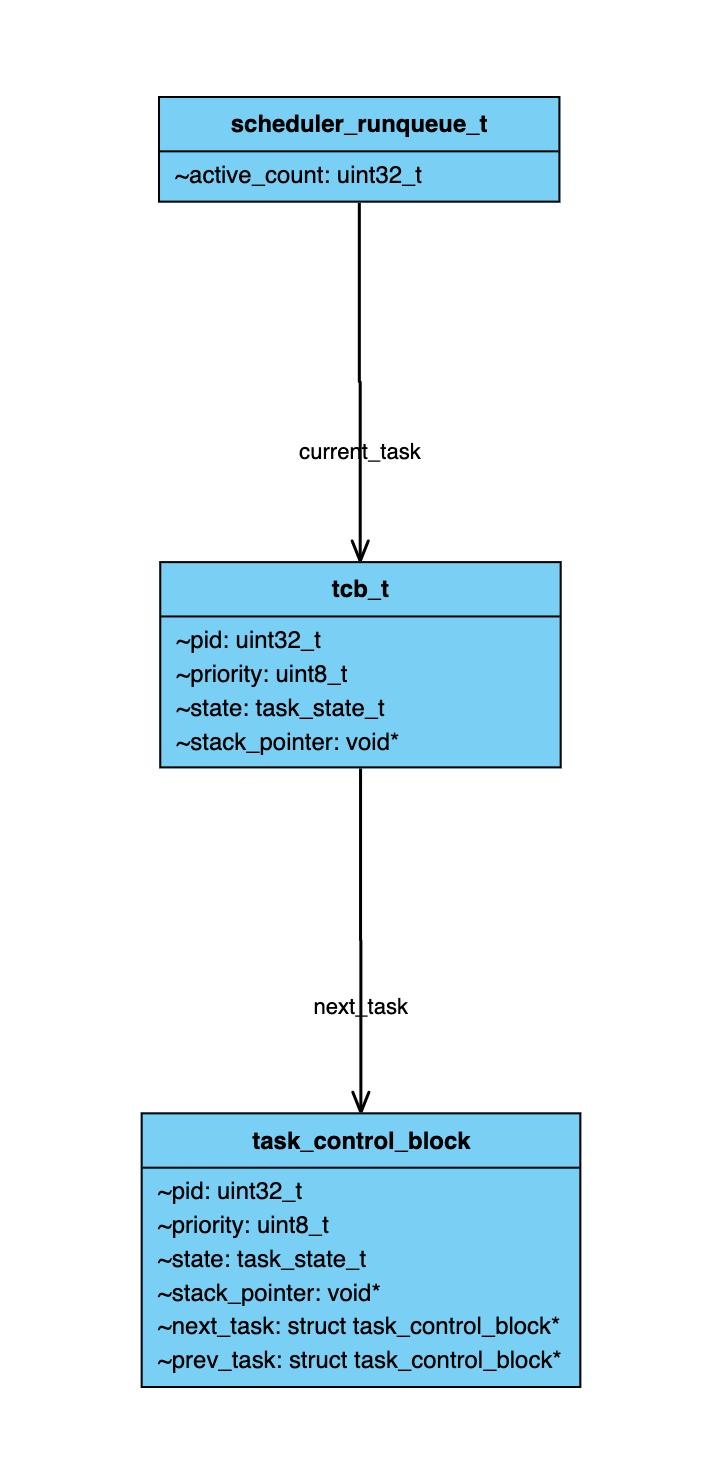
By combining task states, process metadata structs, and doubly-linked list pointers, VPasCode transforms kernel-level task schedulers into clear node maps:
#include <stdint.h>

typedef enum {
    TASK_READY,
    TASK_RUNNING,
    TASK_BLOCKED,
    TASK_TERMINATED
} task_state_t;

// Process Control Block (PCB)
typedef struct task_control_block {
    uint32_t pid;
    uint8_t priority;
    task_state_t state;
    void *stack_pointer;
    struct task_control_block *next_task;
    struct task_control_block *prev_task;
} tcb_t;

// Kernel CPU Runqueue representation
typedef struct {
    tcb_t *current_task;
    tcb_t *head;
    uint32_t active_count;
} scheduler_runqueue_t;

void scheduler_yield(scheduler_runqueue_t *rq);
Structuring Network Protocols and Data Packet Unions
Visualizing socket abstractions, protocol header structs, and memory-overlapping unions helps network programmers manage binary packet framing.
1. Network Socket & Protocol Buffer Handler
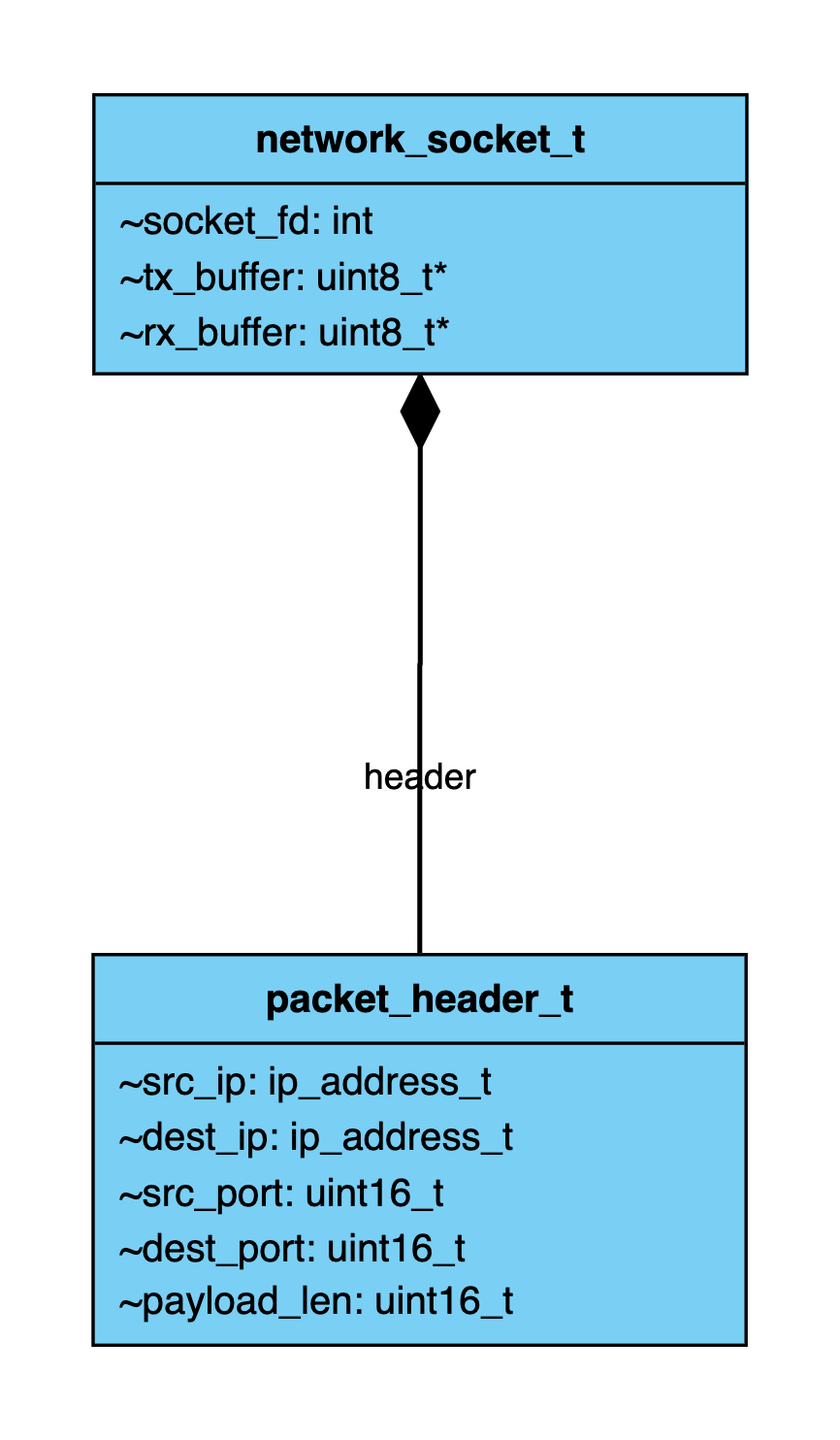
Group socket configuration handles, buffer structs, and packet memory unions to map clear network transport boundaries:
#include <stdint.h>

// Union for raw bytes vs structured IP address
typedef union {
    uint32_t ipv4_raw;
    uint8_t  bytes[4];
} ip_address_t;

// Transport layer packet header
typedef struct {
    ip_address_t src_ip;
    ip_address_t dest_ip;
    uint16_t src_port;
    uint16_t dest_port;
    uint16_t payload_len;
} packet_header_t;

// Socket connection handle
typedef struct {
    int socket_fd;
    packet_header_t header;
    uint8_t *tx_buffer;
    uint8_t *rx_buffer;
} network_socket_t;
Strategic Best Practices
- Use
typedef struct for Clean Types: Define structures with explicit typedef names to keep diagram node labels concise and readable.
- Represent Interfaces with Function Pointers: Model callback behavior and abstraction layers using function pointer fields (e.g.,
read_fn).
- Group Related Memory in Unions: Use
union constructs when modeling hardware registers or overlapping packet layouts to distinguish shared memory regions.


